



How To Earn Passive Income With Crypto In 2026: Staking Rewards Guide
Oct 15, 2026
Technology
Looking for ways to earn passive income in crypto in 2026 without trading every day? The main paths still center on staking, yield strategies, and lighter participation models such as mobile or human-node activity. This guide explains the leading methods, the difference between staking and mining, and how flexible staking rewards work - with a concrete example from InterLink.
What Counts as Passive Income in Crypto?
Not every crypto reward is truly passive. Understanding the difference helps you choose the right method. In crypto, “passive income” usually means earning with limited day-to-day trading: you commit assets or participate under set rules, then receive rewards over time. It does not mean zero effort or zero risk. Token prices can fall, lock-up periods can limit access, smart contracts can fail, and program rules can change.
The most common categories in 2026 are:
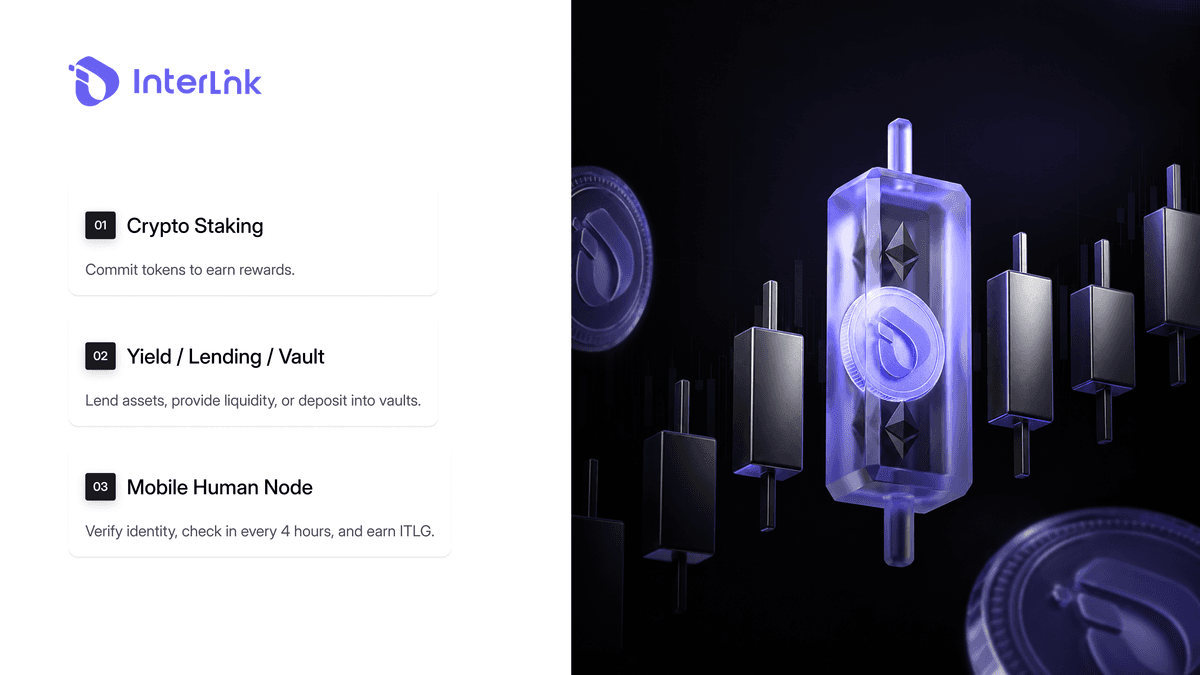
- Staking
- Yield strategies (lending, liquidity, vaults)
- Node-style participation, including lighter mobile / human-node models
Key Concept: Passive Does Not Mean Risk-Free
Passive income in crypto means lower day-to-day effort, not guaranteed profit or zero risk.
Top Ways to Earn Passive Income in Crypto in 2026
These are the methods most beginners and intermediate users explore first.
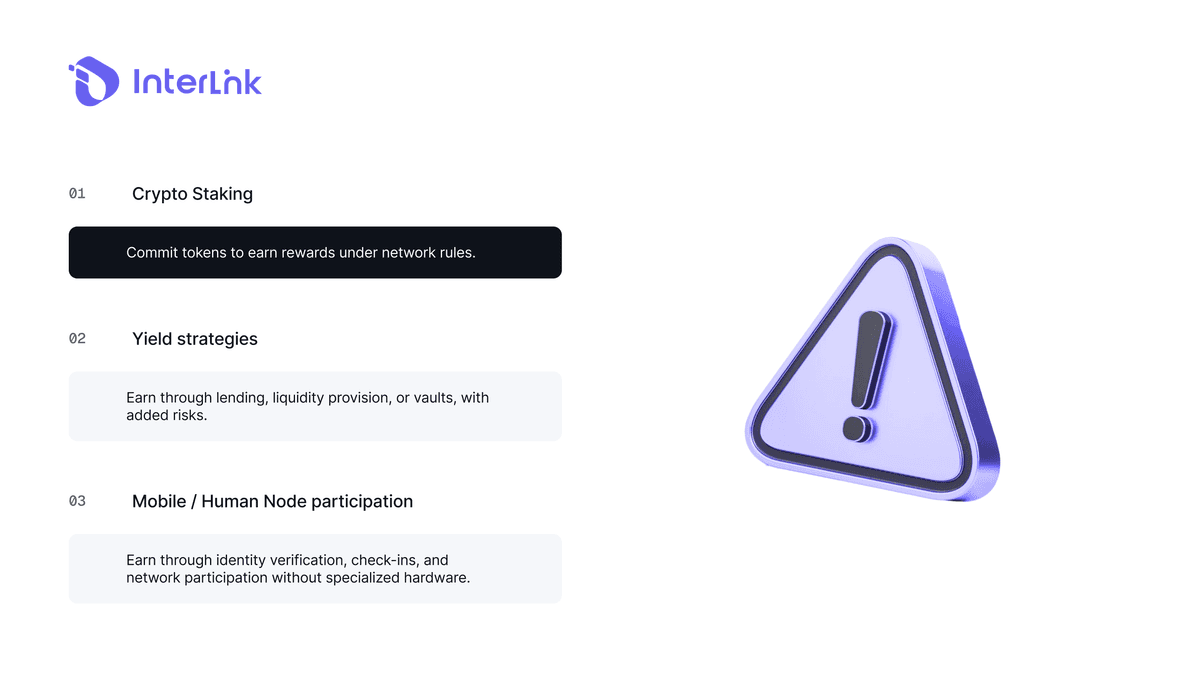
Crypto Staking
Staking means committing tokens under network or program rules in exchange for rewards. It is common on Proof-of-Stake networks and in ecosystem staking programs. It often suits users who already hold an asset and prefer a longer time horizon.
Yield strategies
These include lending, providing liquidity, or depositing into vaults. Potential returns can be higher than basic staking, but risks are usually more complex (smart contract risk, impermanent loss, counterparty risk).
Mobile / Human Node participation
Some networks reward lighter forms of participation instead of energy-heavy mining. Users may earn through identity verification, regular check-ins, or network contribution. Daily effort is often much lower than trading or running specialized hardware.
Key Concept: Staking vs Yield vs Node Activity
- Staking focuses on the commitment of tokens.
- Yield strategies focus on deploying capital into protocols.
- Node activity focuses on participation and network contribution.
Staking vs Mining - What Is the Real Difference?
Many beginners still confuse staking with mining. They are different models.
Mining historically rewards those who secure a network through computational work. Staking rewards users who lock or commit assets according to protocol rules. In some ecosystems (including InterLink), the word “mining” is used more loosely for participation-based earning - which is very different from classic Proof-of-Work mining.
Crypto Staking Rewards in 2026 - How They Work
Staking rewards depend on the network design, lock period, and the role of the token. Rewards may come from new token issuance, transaction fees, or ecosystem incentive programs.
What you actually receive can change with:
- Network conditions
- Lock or vesting terms
- Eligibility rules
- Token utility and demand
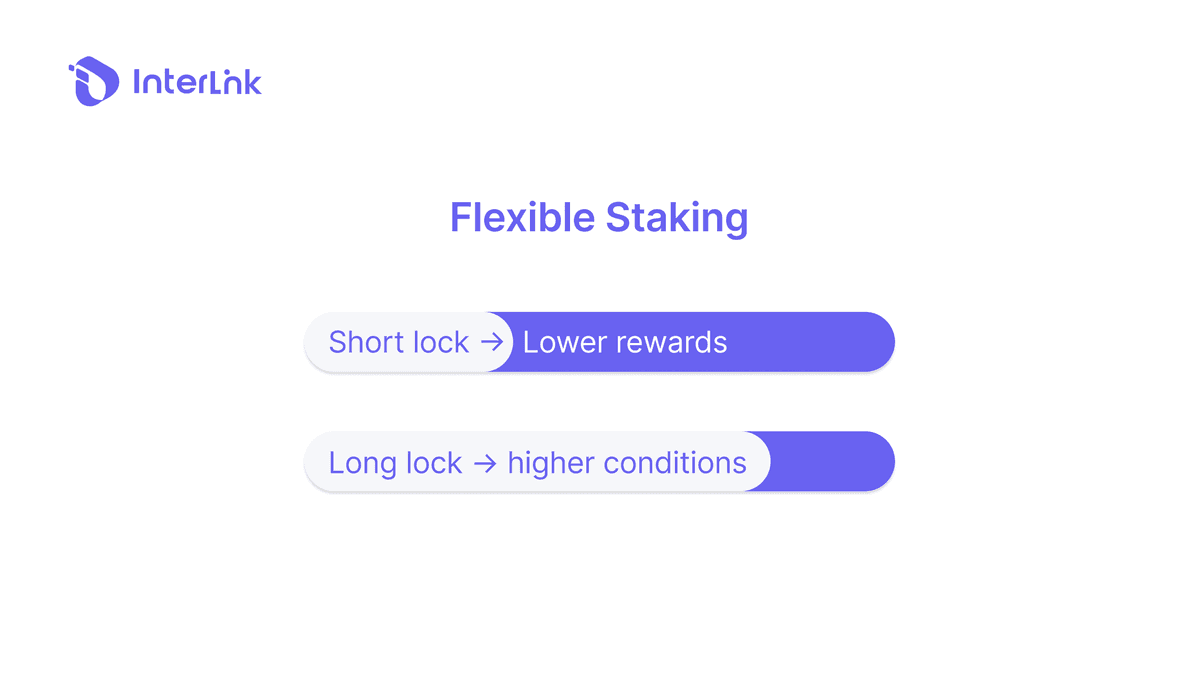
Flexible staking rewards matter because not every user wants the same time horizon. Some prefer shorter commitment with lower rewards. Others accept longer lock periods for better conditions.
Key Concept: Flexible Staking Rewards
Flexible staking means users can choose different commitment terms and reward conditions, instead of one rigid setup for everyone.
How InterLink Fits into the Passive Income Landscape
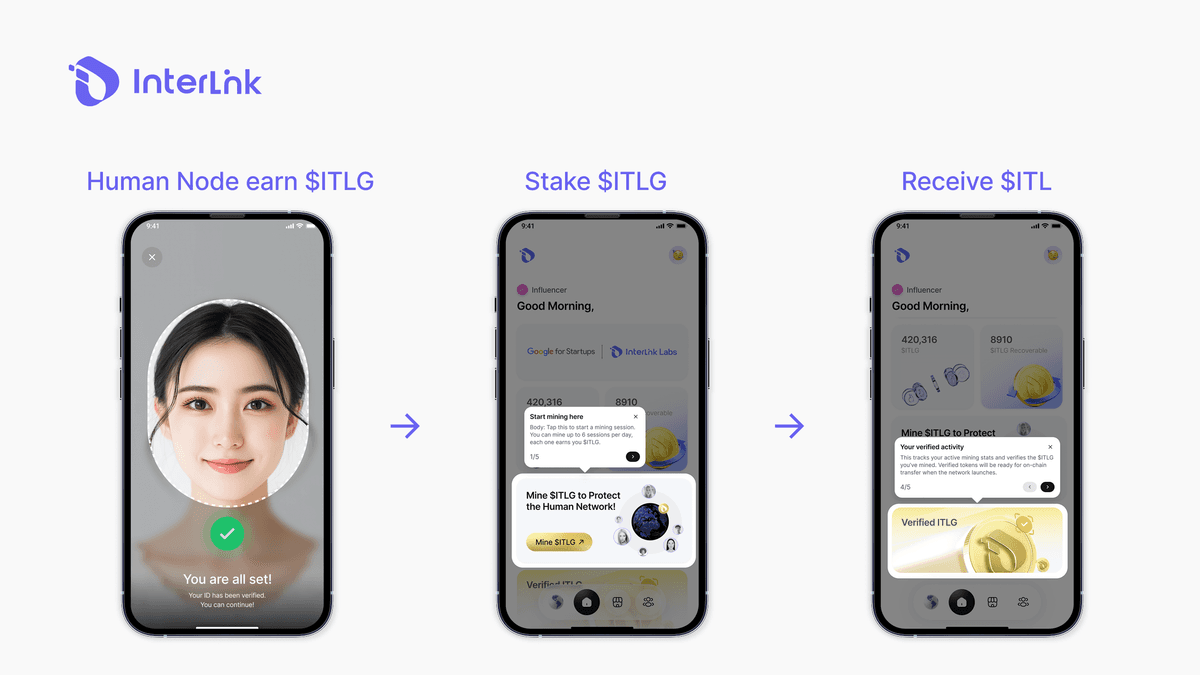
InterLink provides an example of a participation-based earning model combined with staking. The model consists of two main layers: earning ITLG through regular participation and using eligible ITLG in a staking mechanism to receive ITL rewards under applicable program rules.
Step 1: Earn $ITLG as a Human Node
After completing Proof of Personhood, users can earn ITLG through regular activity on a smartphone. The process involves periodic check-ins, approximately every 4 hours, with up to 6 check-ins per day.
This participation model is designed to be lightweight compared with traditional cryptocurrency mining. It does not require specialized mining hardware or an upfront investment to participate.
Step 2: Stake Verified ITLG to Receive ITL
Staking verified ITLG is the primary pathway for receiving newly issued ITL during the initial phase. The conversion ratio depends on the lock and vesting strategy selected under the rules approved through DAO Proposal 16 (Balanced Growth model).
The three available strategies are:
- 0-year lock + 0-month vesting: 60 ITLG = 1 ITL. This option provides the most flexibility, with no lock-up or vesting period, but has the lowest conversion efficiency.
- 2-year lock + 36-month vesting: 21.25 ITLG = 1 ITL. This option provides a higher conversion ratio while requiring a longer commitment.
- 5-year lock + 60-month vesting: 1.875 ITLG = 1 ITL. This option provides the highest conversion efficiency in exchange for the longest lock and vesting period.
In general, longer commitment periods provide more favorable conversion ratios under the Balanced Growth model. However, users should distinguish between the ITLG they hold and the ITL generated through the conversion process. The selected lock and vesting schedule applies to the converted ITL portion rather than automatically locking the user's entire ITLG balance.
Because governance decisions and program conditions may change over time, users should verify the latest conversion ratios, lock periods, vesting terms, and eligibility requirements through InterLink's official channels and app before committing assets.
Conclusion
In 2026, the main ways to earn passive income in crypto still center on staking, yield strategies, and lighter participation models such as mobile or human-node activity. Staking is not the same as mining: one commits tokens under program rules, while the other historically relied on hardware and energy.
Flexible staking rewards matter because they let users choose terms that match their time horizon. Projects like InterLink combine low-effort Human Node participation with a staking pathway from ITLG to ITL, showing one concrete way passive-style rewards can connect to a broader ecosystem.
Disclaimer: This guide from InterLink Labs is for educational purposes only and does not constitute financial advice. Crypto assets are volatile. Staking and yield strategies involve risk, including possible loss of principal. Always conduct your own research before participating.

