


ITL vs ITLG: Understanding InterLink's Dual-Token Model And DAO Governance (2026)
Aug 21, 2026
Technology
ITL and ITLG are two core tokens within the InterLink ecosystem, but they are designed for different purposes. ITL supports everyday transactions and ecosystem utility, while ITLG gives users a role in governance and participation. This dual-token structure helps separate network utility from governance functions, making it easier to understand how InterLink’s economy and DAO governance work together.
What Are ITL And ITLG Tokens?
Before diving into the details, let us start with the basics. InterLink uses two tokens, and each one has a completely different job. Understanding these roles is the first step to understanding how the entire ecosystem works.
Comparing ITL and ITLG at a Glance
What Is A Human Node?
To understand these tokens, you first need to know what a Human Node is. A Human Node is simply a real person who has verified their identity through facial recognition. Think of it as a digital passport that proves you are a unique human being, not a bot or a fake account.
The Human Layer is the collection of all these verified individuals working together. This system prevents bots from taking over the network and ensures that rewards and voting power go to real people.
ITL Token – The Currency for Payments, Settlement, and Infrastructure
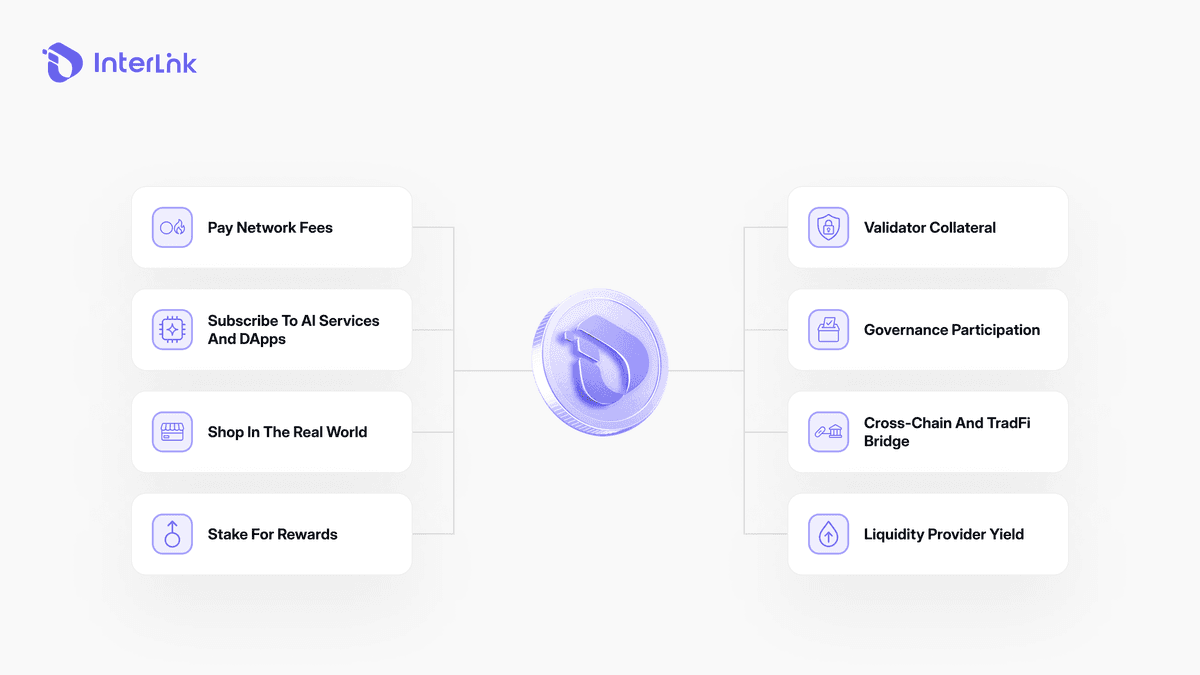
Think of ITL as the backbone currency of the InterLink ecosystem. While you can use it like money to pay for services, ITL actually does much more. It powers every economic operation on the InterLink Chain.
What Can You Do With ITL?
Pay network fees: Every transaction on the InterLink Chain requires gas, and ITL is used for that. A portion of every gas payment is permanently burned.
Subscribe to AI services and dApps: Use ITL to pay for AI tools, applications, and the growing dApp ecosystem within the InterLink network.
Shop in the real world: Through the InterLink Visa and Mastercard, ITL balances are spendable at millions of merchants worldwide. You can also book flights, shop at partner stores, or pay for online subscriptions.
Stake for rewards: ITL is distributed to ITLG stakers who participate in the staking program. This is how ITL enters circulation during the initial phase.
Validator collateral: Validators stake ITL as collateral to secure the network. If they misbehave, their staked ITL can be slashed.
Governance participation: ITL stake weight, combined with InterLink ID weight, governs chain-wide parameters such as fee rates, validator rules, and emission schedules.
Cross-chain and TradFi bridge: ITL serves as the asset that bridges to other blockchain networks and coordinates with traditional payment systems like SWIFT, ACH, and SEPA.
Liquidity provider yield: When you provide liquidity to the AMM pools paired with Business Tokens, you earn trading fees in ITL.
Important to Know
According to the InterLink White Paper, ITL is the most utilized asset in the InterLink economy. Payments, RWA pairings, gas fees, staking rewards, governance votes, and cross-chain settlements all pass through ITL.
ITL plays a role similar to Bitcoin as a store of value, but with much broader utility across the ecosystem.
ITLG Token – The Key to Governance, Rewards, and Ecosystem Access
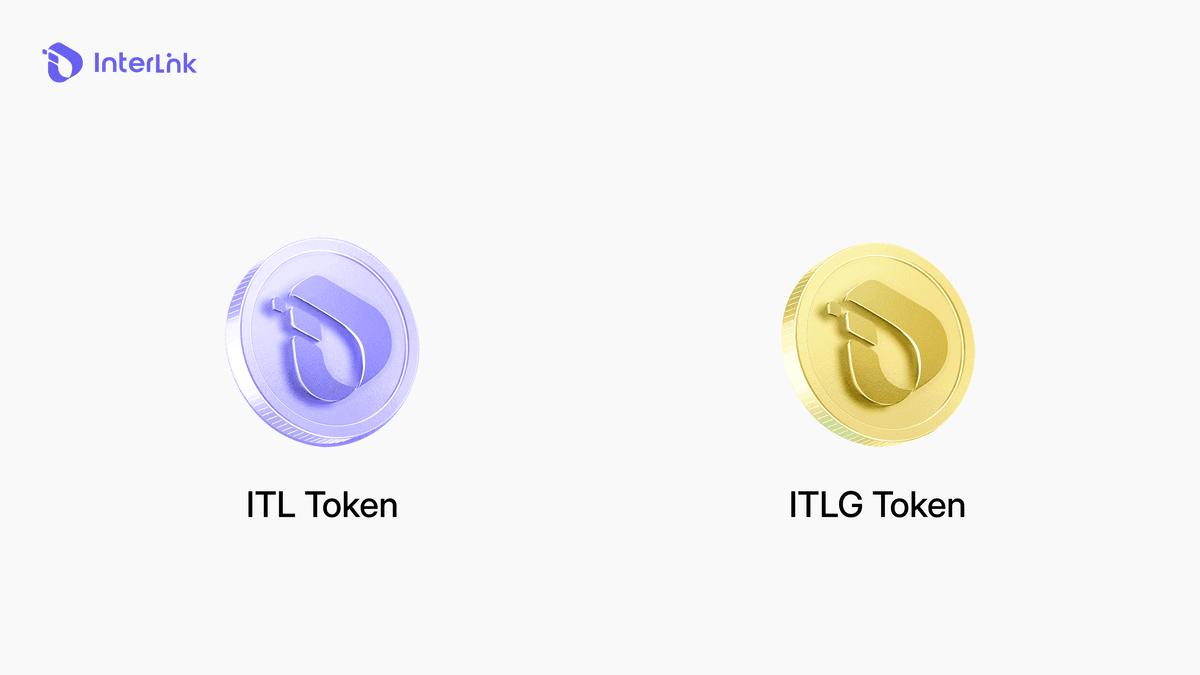
While ITL is the infrastructure currency, ITLG is the token for people. It represents your participation as a verified human in the InterLink network. The more you engage, the more ITLG you earn.
How Can You Earn ITLG?
You do not need expensive hardware to earn ITLG. All you need is your smartphone and daily activity:
Verify your identity: When you complete your InterLink ID setup, you become a Human Node and start earning ITLG.
Check in daily: Open the app and check in to earn ITLG through the mining mechanism.
Invite friends: When you invite new members to join and they verify their identity, you earn additional ITLG.
Contribute data: Share verified data to help train AI models and earn ITLG.
Participate in Ambassador programs: Join community campaigns and engagement programs to earn ITLG.
What Can You Do With ITLG?
Human Node reward: ITLG is the primary reward for Human Node participation. Every miner earns ITLG as the direct economic representation of their verified human presence.
The only path to ITL: In the initial phase, the only way to receive newly minted ITL is to hold ITLG and commit to the staking program. ITLG is the sole gateway to ITL.
Vote in governance: ITLG holders participate in governance decisions affecting the ITLX ecosystem, including product features, listing decisions, and fee parameters.
Stake for rewards: Stake your ITLG to earn ITL tokens as a reward.
ITLX DEX fee discount: Holders of ITLG pay reduced trading fees on the ITLX DEX. The discount tier scales with your ITLG holdings.
Priority access to new projects: ITLG holders get priority access to new product launches and liquidity bootstrap programs in the ITLX ecosystem.
Curator program participation: ITLG is used in Curator role economics, including verification queue services and identity attestation workflows.
Access ITLX DeFi products: ITLG functions as the fee and access asset for ITLX-native DeFi products including DEX features, lending, derivatives, and other services.
dShop in the dApp marketplace: Use ITLG to buy items and services across the growing dApp ecosystem.
Key Concept: InterLink follows a binding Distribution Pact. The token belongs to the people who earn it. There are no private sales, no insider allocations, and no preferential pricing.
The first and only recipients of ITLG at TGE are Human Node Miners. Every ITL in circulation traces back to a verified Human Node who mined ITLG and committed to the staking program.
Why Does InterLink Use Two Tokens?
You might wonder why InterLink does not just use one token like many other projects. The reason is simple: one token cannot do both jobs well.
Think of it this way. If you had one bank account that you used for both daily shopping and long-term savings, you would face a problem. Every time you spend money, you would reduce your savings. And every time the value fluctuated, you would worry about both your spending power and your savings.
InterLink solves this by splitting the responsibilities:
This model is inspired by Bitcoin and Ethereum. Bitcoin is a store of value, while Ethereum is a platform for applications. Together, they create a stronger ecosystem.
How To Participate In InterLink DAO Governance
Now let us talk about one of the most exciting features of InterLink: DAO governance. This is where you, as a regular user, can have a real say in the future of the project.
What Is InterLink DAO?
DAO stands for Decentralized Autonomous Organization. In simple terms, it is a system where the community makes decisions together. When InterLink wants to introduce a new feature or make a change, they post a Proposal. The community then votes on it.
Where do you find it? The DAO Voting feature is located inside the dApp section of the InterLink mobile application. It is easy to find and use.
How Does DAO Voting Work?
The voting process is simple and straightforward. Here is how it works step by step:
InterLink posts a Proposal about a new change or feature.
You go to the dApp section and select DAO Voting.
You choose an active Proposal and select "Vote now."
You pick one of three options: Yes, No, or Abstain.
Your vote is recorded. Remember, you can only vote once per Proposal.
After the voting period ends, the results are announced.
What Are the Three Voting Options?
Here are the three choices you can make when voting on a proposal:
Yes: You approve of the proposal and want it to happen.
No: You reject the proposal and do not want it to happen.
Abstain: You choose to stay neutral because you don't have a strong opinion either way.
Can You Track Your Votes?
Yes, you can easily track everything. The Overview section shows you real-time voting progress for each Proposal. You can also check your Vote History to see all the votes you have participated in. Each Proposal is open for a specific period, so make sure you vote before the deadline.
Fair Voting Rules That Protect The Community
InterLink’s governance is designed from the ground up to prevent rich investors or automated software from taking control.
Here are the key safeguards in place:
No Private Token Sales: You cannot simply buy millions of ITLG tokens with fiat money. ITLG must be earned through real human activity, making it impossible for outside investors to "buy out" a vote.
One Real Human, One Account: Facial verification ensures that each person can only operate one account. No one can create 1,000 fake accounts to stack votes.
Quadratic Voting Math: As shown above, token influence scales down for massive balances, protecting the community from whale manipulation.
On-Chain Transparency: Every vote is recorded permanently on the public blockchain, so anyone can audit the results.
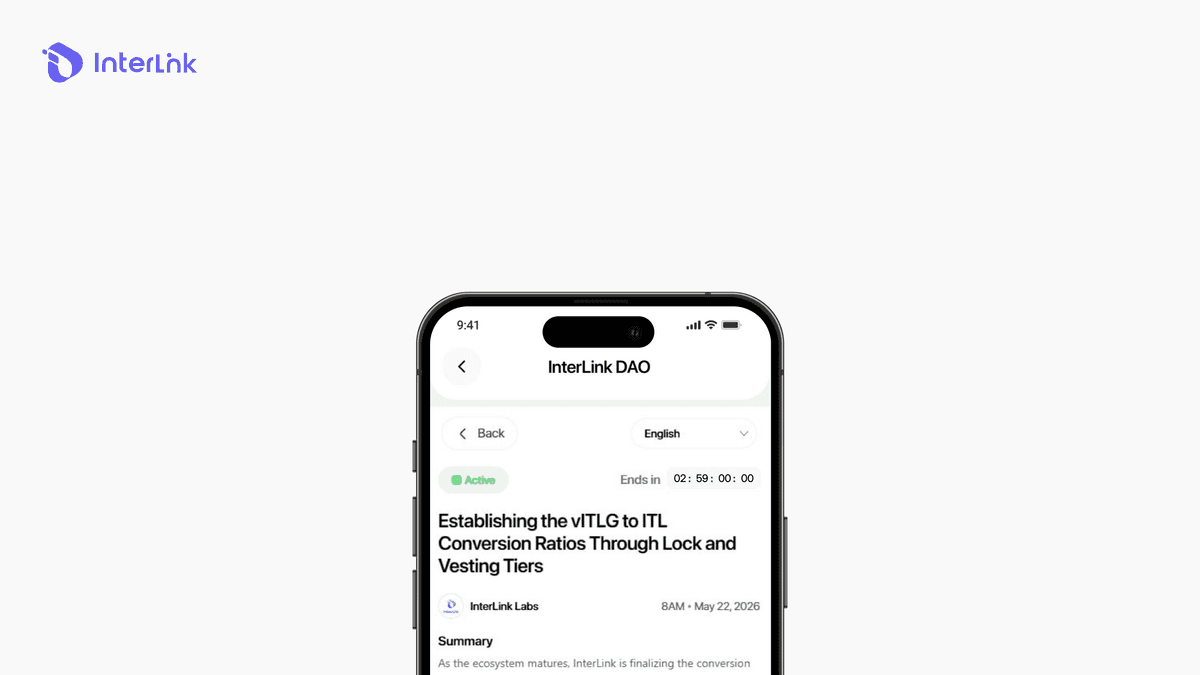
Real-World Example: DAO Proposal 16
DAO Proposal 16 is a great example of how community voting works in practice. During this vote, members evaluated three different machine-learning models. After careful consideration, the community chose the Balanced Growth framework.
This decision set the conversion rates and vesting timelines that the entire ecosystem uses today. It shows that community guidance is not just an option. It is the foundation of the project.
What Do You Need to Participate In DAO Voting?
To join DAO voting, you only need two things:
Steps to Get Started
Download the InterLink app and complete facial verification.
Start earning ITLG through daily check-ins, referrals, and interactions.
Go to the dApp section and select DAO Voting.
Choose an active Proposal and select "Vote now."
Pick Yes, No, or Abstain.
Monitor the results in the Overview section.
Tips For New DAO Participants
Read the Proposal carefully: Make sure you understand what you are voting on.
Accumulate ITLG: The more you have, the more influence you have.
Watch the deadlines: Each Proposal is only open for a limited time.
Check your Vote History: Review your past votes to stay informed.
Disclaimer: This article from InterLink Labs is for educational and informational purposes only and should not be construed as financial or investment advice. Digital tokens involve market volatility and risk. Always conduct independent research before participating in blockchain projects.
Coutinue reading: To see how InterLink extends this ecosystem beyond tokens and governance, explore how its Mobile DePIN transforms smartphones into decentralized AI powerhouses.

