



Business Token vs Stock: IPO Alternative For SMEs?
Oct 15, 2026
Our journey
For many SMEs, a traditional IPO is too expensive and too slow. Business tokens are emerging as a practical alternative, linking real commercial activity to on-chain capital markets without the full stock-market path. This guide compares the two models on cost, liquidity, legal barriers, and governance.
What Is a Business Token and What Is a Stock?
Before comparing the two models, it is essential to understand what each represents and the rights they confer. This distinction is the foundation for evaluating whether a business token can serve as an IPO alternative.
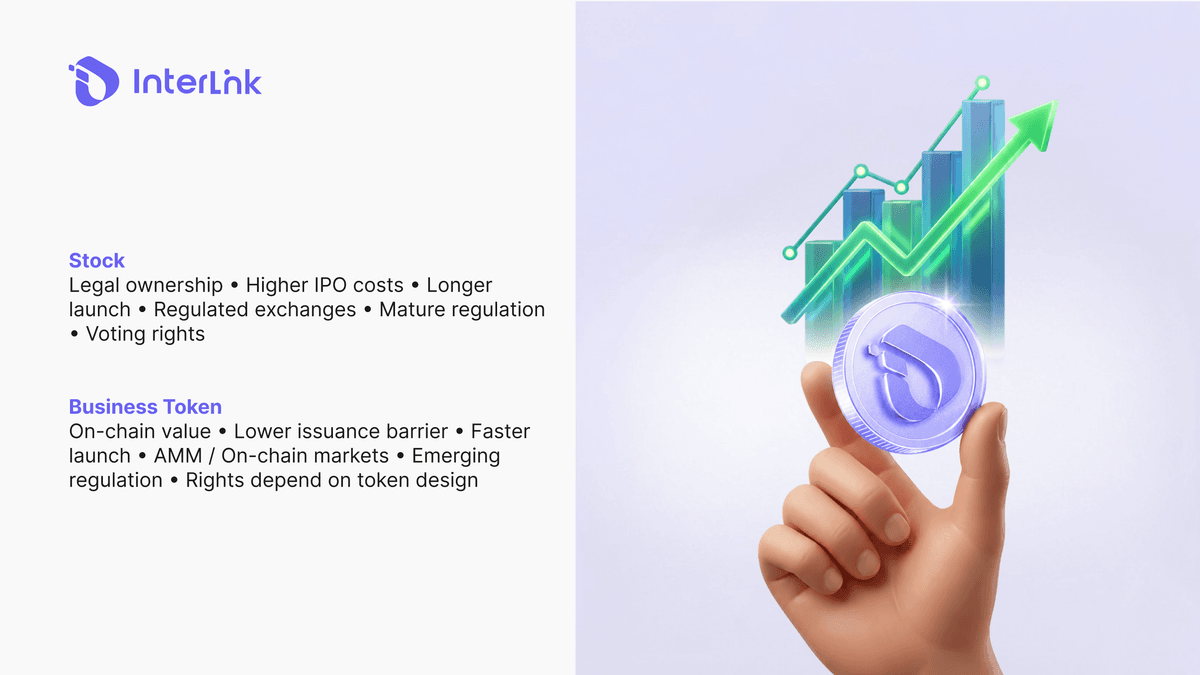
A stock represents legal ownership in a company. Shareholders may receive dividends, voting rights, and protections under mature securities laws. In return, companies face high disclosure, compliance, and listing requirements. The trade-off is clear: access to public capital markets comes with significant regulatory obligations.
A business token is an on-chain representation of a company's economic activity or business value. Its rights depend on the token design, smart contract rules, and local law. It is not automatically the same as a legal share. Understanding this distinction is critical before assuming that a business token carries the same rights as equity.
Key Concept: Ownership vs. On-Chain Economic Representation
A stock usually means legal ownership. A business token represents an on-chain economic design tied to business activity, which may or may not include classic shareholder rights.
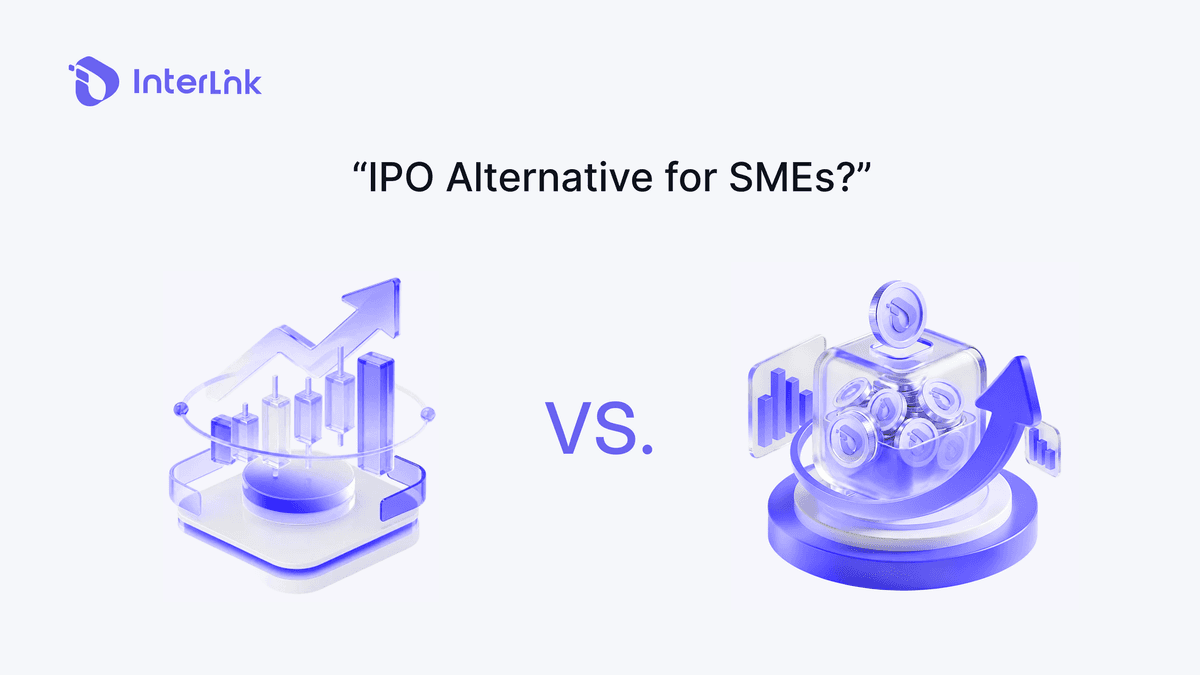
Business Token vs Stock: Key Differences at a Glances
A side-by-side view makes the practical differences easier to understand.
Cost Comparison – Why IPO Is Hard for SMEs
Cost is one of the most significant barriers preventing SMEs from accessing public markets. Understanding the cost structure of both models helps clarify where tokenization offers a practical advantage.
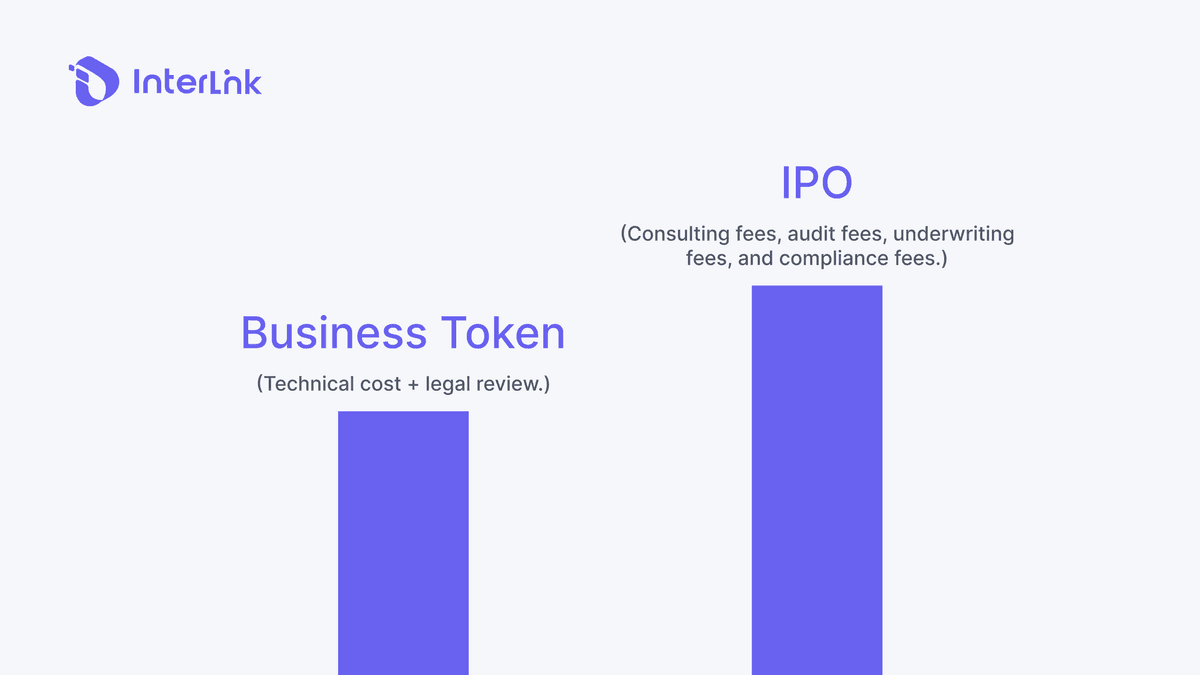
An IPO involves advisory fees, audits, underwriting, regulatory filings, and ongoing compliance. For many small businesses, these fixed costs are simply too high. More than 99% of businesses worldwide are small and medium-sized enterprises, yet most will never reach the IPO stage because the cost and complexity are prohibitive.
Business token issuance can be lighter on pure technical cost, especially when ready blockchain infrastructure exists. Legal review, smart contract security, and operations still matter. The practical difference is a lower entry barrier for businesses not ready for a full public listing.
Liquidity Comparison – Exchange Listing vs On-Chain Markets
Liquidity is a critical factor for any capital-raising model. The way liquidity is created and maintained differs significantly between stocks and business tokens.
How Stock Liquidity Works
Listed stocks rely on regulated exchanges and market makers. Liquidity can be strong for large companies, but smaller listings may still struggle. For SMEs, the path to exchange listing is long and expensive, and even after listing, thin trading volume can limit practical liquidity.
How Business Token Liquidity Works
Business tokens typically use on-chain markets such as AMM pools or dedicated marketplaces. This can allow earlier access, though early liquidity may remain thin. In InterLink's design, each Business Token is paired with ITL in a protocol-embedded AMM pool, and IBTE serves as the marketplace layer. A portion of every transaction, specified in the protocol as 5%, is automatically routed into the Business Token's AMM pool, creating sustained buy-side demand tied to actual commerce.
Current Status of IBTE
As of now, no firm launch date for IBTE has been confirmed. The marketplace is in development, with the Transaction-Backed Digital Assets Protocol v1.0 already launched. The goal is to create settlement and liquidity structure from the start, rather than waiting for a later exchange listing.
Key Concept: Built-In Liquidity Design
Some token models create liquidity at issuance through protocol-embedded pools, rather than waiting for a later exchange listing.
Legal Barriers – Securities Law vs Emerging Token Frameworks
Stock markets operate under mature securities laws - strict, costly, and relatively clear. That clarity is valuable, but it is also why many SMEs never reach the IPO stage.
Business tokens sit in a newer legal environment. Depending on the jurisdiction and design, a token may still be treated as a security. Tokenization does not automatically avoid regulation. Local legal advice remains essential.
Governance and Control – Voting Rights vs Protocol Rules
With stocks, issuing shares can dilute ownership and voting power. Shareholders may influence major decisions through formal processes.
With business tokens, rights depend entirely on the smart contract and protocol design. Holding a token does not automatically mean board control or classic shareholder voting power. In InterLink’s model, Business Tokens are built around transaction-backed market mechanics rather than traditional dividends or automatic equity rights. Value support comes from real payment activity routed into the token’s market structure.
Key Concept: Business Tokens Are Not Automatic Equity
Holding a business token does not automatically mean holding legal shares or board-level control. Rights depend entirely on the token’s design and local law.
Is a Business Token a Realistic Alternative to IPO for Small Business?
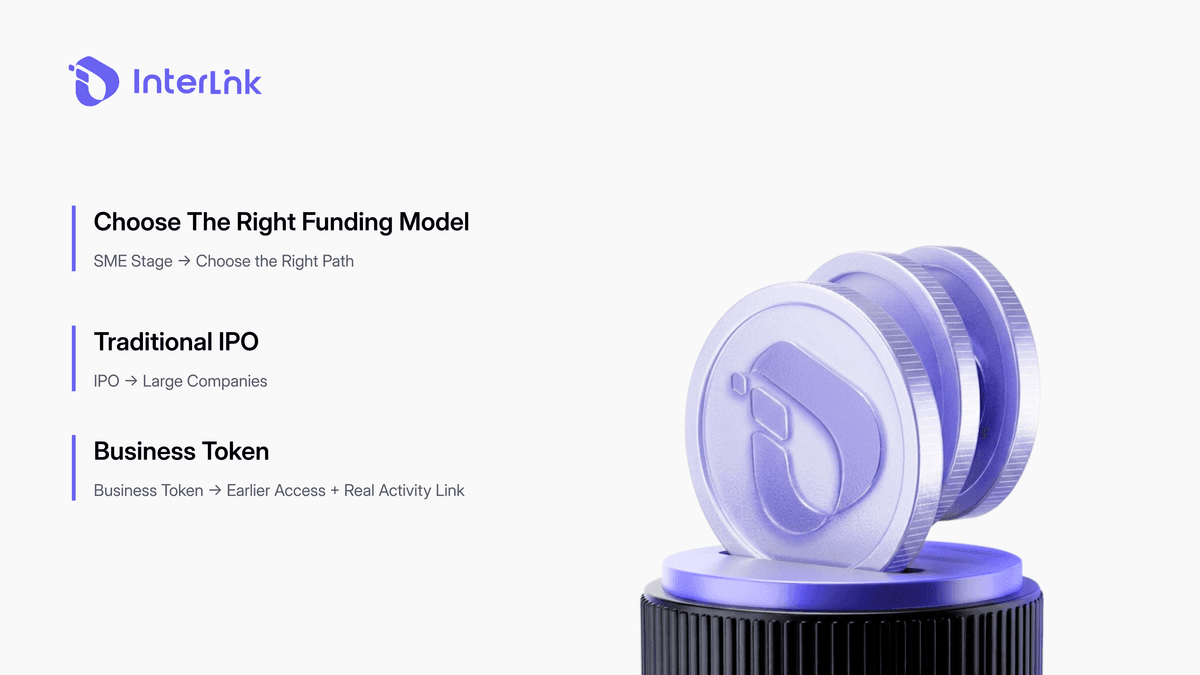
The better question is not “Which is universally better?” but “Which fits the stage and goal of the business?” An IPO may suit larger companies prepared for public disclosure and high compliance costs. A business token may better fit smaller businesses seeking earlier market access, a closer link between token value and real commercial activity, and more flexibility around ownership.
It is not a perfect substitute. Risks remain: limited early liquidity, evolving regulation, market volatility, and no guaranteed return. Still, for many SMEs, tokenization is one of the few realistic paths to connect business operations with digital capital markets without the full burden of an IPO. InterLink’s approach shows one concrete version: verified businesses issue Business Tokens, each paired with ITL, supported by real transaction flow, and made tradable through IBTE.
Conclusion
Business tokens and stocks both help businesses access capital, but on different foundations. Stocks offer mature rights and regulated markets at high cost. Business tokens provide a more flexible path that can better fit SMEs - especially when linked to real commercial activity - while carrying newer legal and market risks.
For small businesses, tokenization is a potential alternative to IPO, not a universal replacement. InterLink’s model - Business Tokens paired with ITL and traded through IBTE - shows one clear direction: connect on-chain value to real transaction flow rather than classic share ownership alone.
Disclaimer: This guide from InterLink Labs is for educational purposes only and does not constitute financial, legal, or investment advice. Business tokens may be regulated differently by jurisdiction. Token values can fluctuate. Always conduct your own research and consult qualified professionals before making decisions.

