




Earn Crypto Without Investment – Legitimate Methods 2026
Oct 28, 2026
Technology
The promise of earning crypto without spending money sounds appealing, but the space is crowded with scams designed to steal your data or funds. This guide separates legitimate methods from fraudulent schemes, showing you how to earn free crypto on mobile through verified AI tasks, biometric check-ins, and node participation. We also explain how InterLink's Human Node model offers a hardware-free approach to earning rewards.
The Risks and Realities of Earning Free Crypto
Before exploring earning methods, it is important to understand the risks involved. Genuine opportunities exist, but scammers often use the appeal of free cryptocurrency to target inexperienced users. Knowing how legitimate platforms operate helps protect your personal data and avoid financial losses.
Why "Free Crypto" Attracts Scams
Cryptocurrency offers real opportunities to earn digital assets through active participation and network contributions. However, the promise of receiving valuable tokens without paying upfront also attracts fraudulent projects. Every opportunity requires careful evaluation of its developers, token utility, and withdrawal rules.
Red Flags Every User Should Know
Watch for these critical warning signs when evaluating free crypto opportunities:
- Unsolicited offers: Messages promising free tokens without a verifiable source.
- Guaranteed returns: Claims of fixed profits or high earnings with zero risk.
- Upfront payments: Requests for deposits or fees to release earned tokens.
- Aggressive referrals: Systems dependent solely on recruiting new members.
- Fake applications: Imitation apps collecting sensitive personal credentials.
A legitimate platform transparently explains its earning mechanism and never asks for your private keys.
The Golden Rule of Free Crypto
Never pay to unlock rewards you have already earned, and never share your seed phrase. Legitimate services may charge standard network fees, but these are distinct from suspicious unlock payments demanded by scams.
How to Earn Free Crypto on Mobile
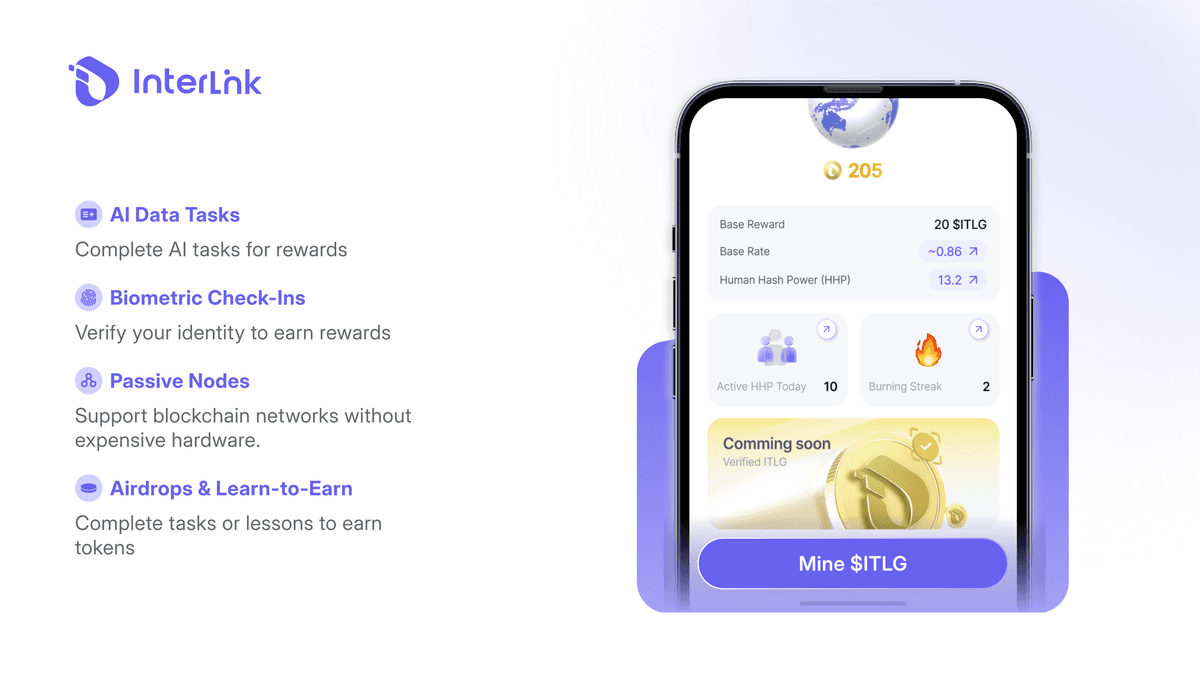
Several verified methods allow users to earn cryptocurrency via mobile devices without hardware investments. Earnings, effort, and risk profiles vary significantly across different mechanisms.
Method 1 - AI Data Tasks and Validation
Decentralized AI projects reward users for contributing data, labeling information, or validating outputs. Participants register, complete micro-tasks, and earn token rewards based on system contributions.
Method 2 - Biometric Check-Ins and Proof of Personhood
Proof of Personhood systems verify unique human identities using liveness detection or facial checks. Verified participation serves as a basis for token distributions without intensive computational mining.
Method 3 - Passive Node Participation
Lightweight nodes enable users to support blockchain networks via smartphones or personal computers. Nodes assist in relaying data or validating info in exchange for continuous network rewards, often accessible through a modern free mining app designed for mobile accessibility.
Method 4 - Airdrops and Learn-to-Earn Programs
Airdrops distribute tokens for community engagement, while learn-to-earn programs reward users for completing educational modules. Both offer ideal entry points for crypto beginners.
How InterLink Approaches Free Crypto Earning
InterLink offers a practical example of a hardware-free earning model with genuine utility. Developed by InterLink Labs, the ecosystem integrates identity-verified participation with scalable Web3 tools. As of early 2026, InterLink had surpassed 9 million registered users, with over 5 million verified human users, positioning it as one of the largest real-identity Web3 networks.
Human Node Mining - No Hardware Required
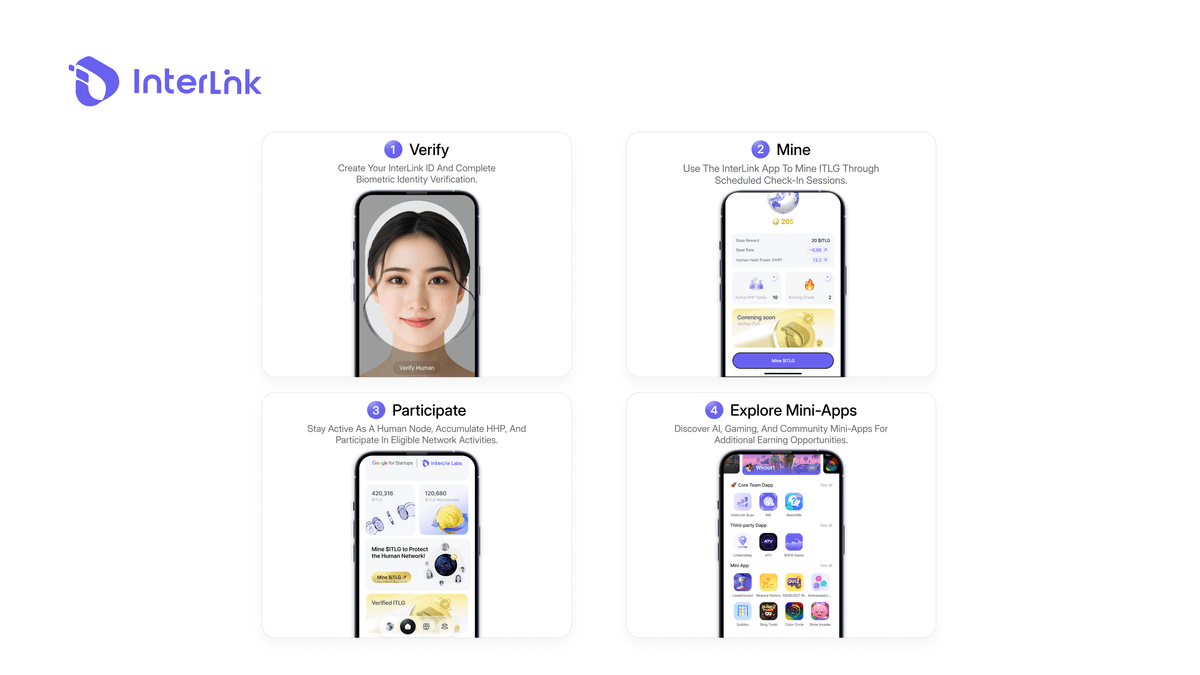
The Human Node system connects verified identity with ITLG token rewards. Users complete biometric checks and maintain regular activity check-ins to receive ongoing distribution rewards.
- Create InterLink ID: Complete initial biometric verification.
- Start Mining: Check in periodically within the app interface.
- Maintain Activity: Build Human Hash Power through active daily engagement.
This hardware-free approach minimizes technical barriers while requiring consistent check-ins from participants.
- Privacy-Preserving Verification: InterLink utilizes encryption, decentralized storage, and zero-knowledge proofs to safeguard biometric records, ensuring identity verification without compromising personal privacy.
- The Mini-App Ecosystem: The Mini-App ecosystem connects users to gaming, social, and AI applications, offering diverse channels to earn additional rewards using a unified InterLink ID.
Realistic Expectations
Token rewards should be evaluated objectively based on actual market liquidity rather than projected in-app valuations. InterLink’s DAO Proposal 16 outlines structured ITLG-to-ITL conversion tiers.
- No lock-up: 60 ITLG for 1 ITL.
- Two-year lock-up: 21.25 ITLG for 1 ITL.
- Five-year lock-up: 1.875 ITLG for 1 ITL.
How to Stay Safe While Earning Free Crypto
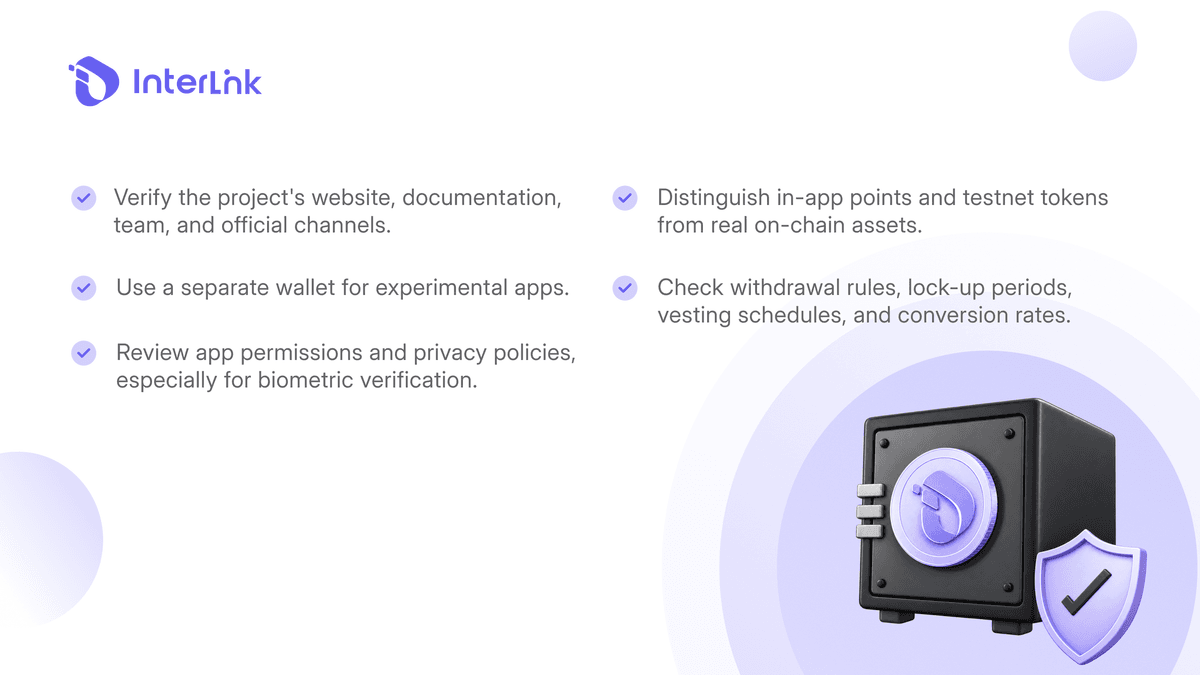
Maintaining strict security protocols ensures safe participation across all earning methods.
- Verify Before You Trust: Thoroughly research projects and download apps only from official channels to avoid impersonators and phishing schemes.
- Protect Your Data and Assets: Use dedicated experimental wallets, enable two-factor authentication, and never reveal your recovery seed phrase.
- Understand What You're Earning: Distinguish between off-chain reward points and tradable on-chain tokens by reviewing withdrawal thresholds and vesting schedules.
Conclusion
Earning crypto without investment is practical through verified AI tasks, biometric check-ins, nodes, and airdrops. Prioritize platform security and data protection while exploring these opportunities. Before getting started, verify each platform, understand its reward conditions, and protect your personal data. Treat free crypto as an opportunity to explore blockchain rather than a guaranteed source of income.
Disclaimer: This article is for educational purposes only and does not constitute financial advice. Cryptocurrency involves risks, so always conduct your own research before participating.

