


How The InterLink Ecosystem Works: App, Wallet & Chain
Sep 30, 2026
Technology
The InterLink ecosystem is built around three core components that work together as one unified network. The InterLink App is where users verify their identity and access services. The ITLX Wallet is where assets are stored, traded, and spent. The InterLink Chain is the blockchain infrastructure that settles transactions and powers everything on-chain. This guide explains each component and how they connect to form the Human Network.
The Main Components of the InterLink Ecosystem
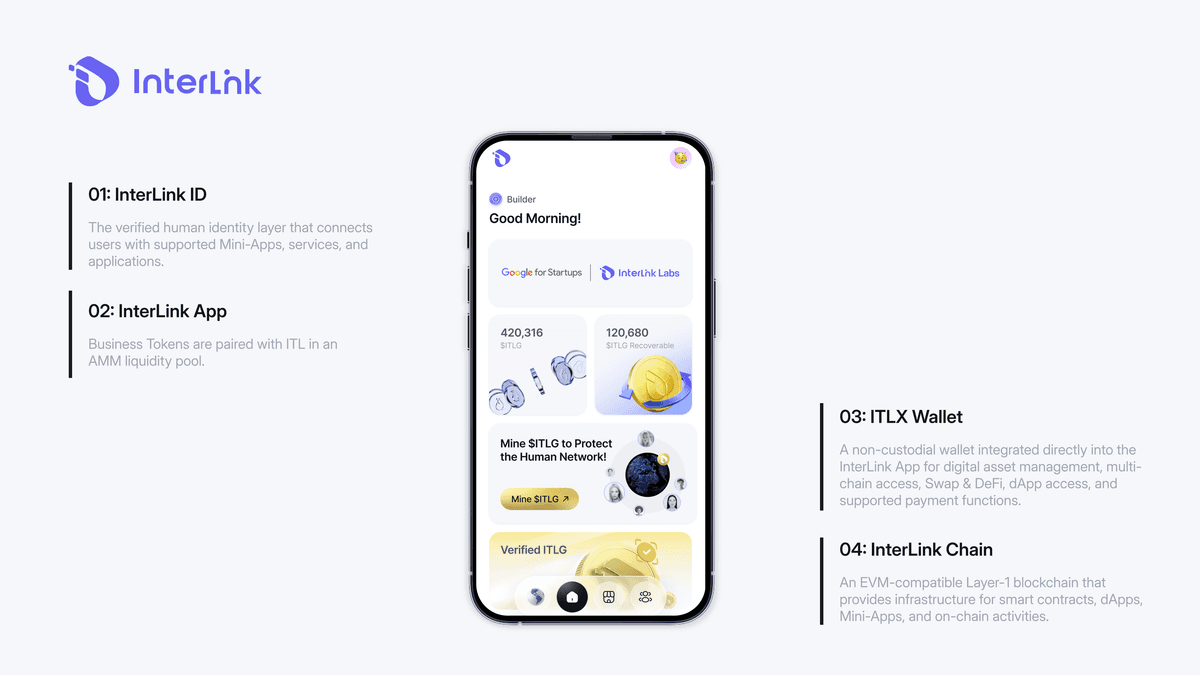
InterLink Labs describes its ecosystem around a human-first architecture that combines identity, applications, digital assets, and blockchain infrastructure. The main user-facing components include:
- InterLink App – The primary gateway for managing InterLink ID, accessing Mini-Apps, tracking rewards, and using supported ecosystem services.
- ITLX Wallet – A non-custodial wallet built into the InterLink App for managing supported assets and accessing decentralized applications.
- InterLink ID – The verified human identity layer that connects users with supported applications and services.
- InterLink Chain – The EVM-compatible Layer-1 blockchain that provides infrastructure for decentralized applications and on-chain activity.
The relationship is better understood as an integrated system rather than three completely separate products. The ITLX Wallet is natively built within the InterLink App, while InterLink ID connects the user experience across supported services. InterLink Chain provides the blockchain infrastructure underneath supported on-chain applications and transactions.
InterLink App – The User Gateway
The InterLink App is the primary entry point to the InterLink ecosystem. According to InterLink's documentation, users can manage their InterLink ID, explore Mini-Apps, track rewards, and access decentralized services through the app. The app also includes a built-in wallet experience for managing digital assets. What you can do in the InterLink App:
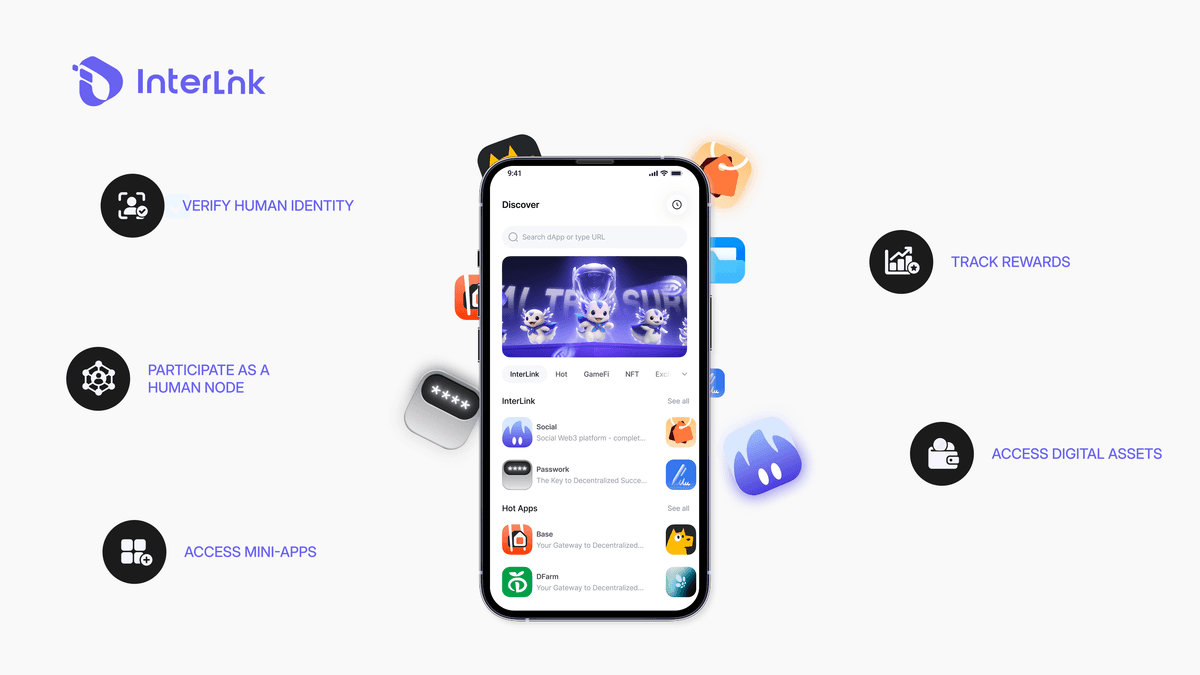
The InterLink App combines identity, participation, and application access in one interface. Key functions include:
- Verify human identity: Users can complete InterLink's human verification process to establish a verified InterLink ID.
- Participate as a Human Node: The app supports participation and reward-related activities, including ITLG-related functions.
- Access Mini-Apps: Users can launch lightweight applications directly inside the InterLink App without installing each Mini-App separately.
- Track rewards and ecosystem activity: The app provides access to reward-related information and other ecosystem functions.
- Access digital assets: The built-in wallet connects users with supported asset-management and Web3 functions.
This makes the InterLink App more than an identity-verification tool. It is the main interface for interacting with the Human Network, managing your InterLink ID, discovering Mini-Apps, and following ecosystem participation.
ITLX Wallet – The Asset and Web3 Layer
The ITLX Wallet is the integrated non-custodial wallet within the InterLink ecosystem. It is connected to the user's InterLink ID and provides a single interface for managing digital assets, accessing DeFi applications, trading, staking, and making payments. As a non-custodial wallet, it is designed to give users direct control over their assets while connecting them to services across the broader ecosystem.
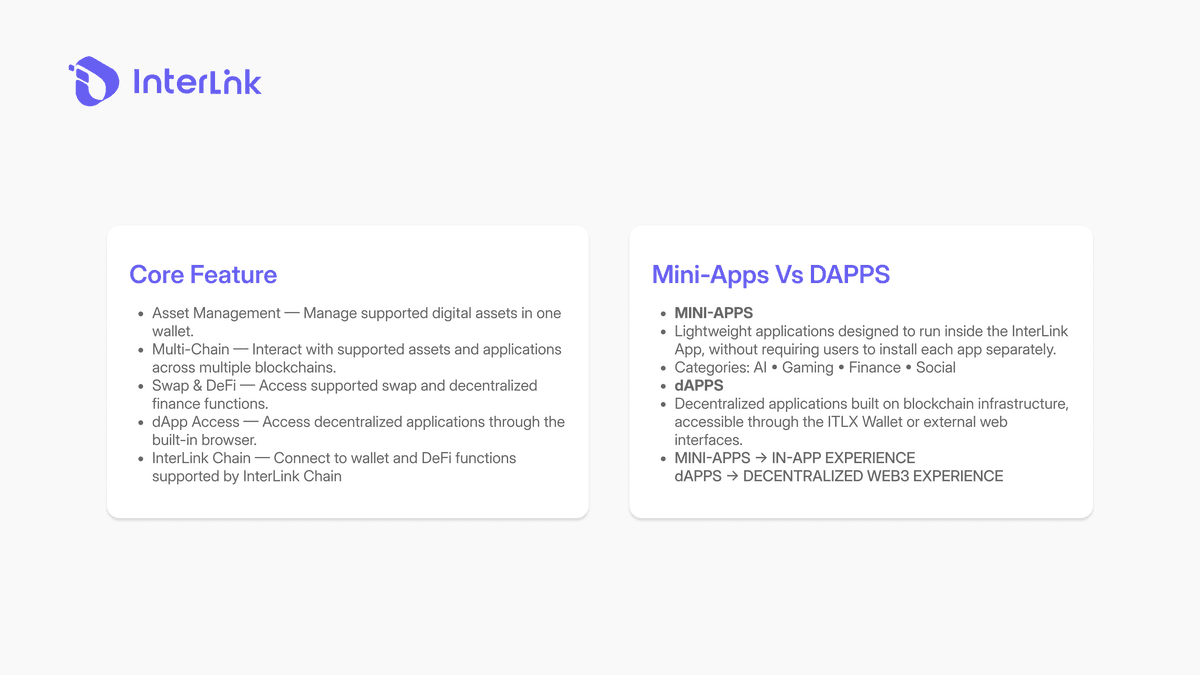
Core Wallet Features
The ITLX Wallet brings several crypto and DeFi functions together in one place:
- Asset management: Manage supported digital assets through a single wallet interface.
- Multi-chain access: Interact with supported assets and applications across multiple blockchain networks.
- Swap and DeFi access: Use supported decentralized finance functions, including swap and other on-chain services.
- dApp access: Open supported decentralized applications through the wallet's built-in browser.
- InterLink Chain integration: Access wallet and DeFi functions connected to InterLink's own blockchain infrastructure.
This makes the wallet the main asset-management layer of the InterLink ecosystem, connecting the user's identity and applications with blockchain-based assets.
Payment and Wallet Features
InterLink has also expanded the wallet and app toward payment-related use cases. Version 6.0 of the InterLink App added support for WalletConnect payment requests and QR-code scanning directly from the device gallery.
InterLink's current ecosystem documentation also describes payment-related services and the use of ITL as the ecosystem's payment and settlement currency. Availability can vary depending on the service, supported assets, network, and region.
Mini-Apps vs dApps: Where Do They Fit?
One important distinction helps explain how the InterLink ecosystem works.
Mini-Apps
Mini-Apps are lightweight applications designed to run inside the InterLink App. Users can open them directly from the Mini-App section without downloading each application separately. Current InterLink documentation lists Mini-App categories such as:
- AI
- Gaming
- Finance
- Social
The Mini-App model is designed around a shared InterLink ID and a consistent in-app experience.
dApps
dApps are decentralized applications built on blockchain infrastructure. In the InterLink ecosystem, supported dApps can be accessed through the ITLX Wallet's built-in browser or through external web access. InterLink's current documentation gives examples such as BitFlip and other decentralized applications available through the wallet ecosystem.
In simple terms:
- Mini-Apps → run inside the InterLink App
- dApps → broader decentralized applications accessed through the ITLX Wallet or external interfaces
This distinction makes it easier to understand why Mini-Apps and dApps can both be part of the InterLink ecosystem without being exactly the same product category.
InterLink Chain – The Blockchain Infrastructure
The InterLink Chain provides the blockchain infrastructure underneath the ecosystem. It is described by InterLink as an EVM-compatible Layer-1 blockchain designed to support decentralized applications and Mini-Apps. EVM compatibility allows developers familiar with Ethereum development tools and smart-contract technologies to build applications for the network.
Key Technical Features
InterLink's published technical materials highlight several characteristics of the chain:
- EVM compatibility: Developers can use familiar Ethereum-compatible technologies and smart-contract tooling.
- Mini-App infrastructure: The chain provides the underlying infrastructure for decentralized applications, including InterLink Mini-Apps.
- High-performance design: The whitepaper gives a target throughput of 10,000 TPS and a target finality time of 2 seconds. These are published technical targets, not guarantees of current production performance.
- Human-centric architecture: InterLink integrates verified human identity into its ecosystem through InterLink ID and Proof of Personhood.
- On-chain services: The chain supports applications and services that require blockchain transactions and smart-contract functionality.
InterLink Labs has also published testnet performance results. For example, its Taj Mahal Testnet documentation reported up to approximately 2,000 settled TPS with deterministic finality below 2.3 seconds. Because this figure refers to a testnet, it should not be presented as a guaranteed mainnet performance figure.
The Seoul Private Mainnet
The Seoul Private Mainnet represents the transition from testnet-focused development toward live blockchain infrastructure. InterLink states that the ITLX DeFi Wallet was connected to the Seoul Private Mainnet infrastructure on June 23, 2026, ahead of the official launch. The June 2026 Version 6.0 rollout introduced functions connected directly to the live blockchain infrastructure, including native ITLG staking.
The InterLink App's version history lists Version 6.0.0 on July 3, 2026, followed by Version 6.0.1 on July 23, which specifically lists InterLink Private Mainnet support. This means the term Private Mainnet should not be interpreted as an inactive network. InterLink describes it as a live network where access and functionality are being expanded in stages.
How the InterLink Components Connect
The different parts of the ecosystem have different roles, but they are designed to work together.
Through InterLink ID
InterLink ID acts as the identity layer across supported applications. Users establish their verified human identity through the InterLink ecosystem and can then use that identity across supported Mini-Apps and integrated services. This reduces the need to create separate identities for every application.
Through the InterLink App
The InterLink App provides the main user interface. Users can access Mini-Apps, manage identity-related functions, view rewards, and use the integrated ITLX Wallet without treating each function as a separate application.
Through ITLX Wallet
The wallet connects users to digital assets, supported DeFi functions, and dApps. Because ITLX Wallet is built into the InterLink App, the transition from user-facing Mini-Apps to wallet-based Web3 services can happen within the same broader environment.
Through InterLink Chain
InterLink Chain provides the underlying blockchain infrastructure. Supported Mini-Apps and dApps can use blockchain functionality, while wallet transactions and other supported on-chain activities can interact with the network.
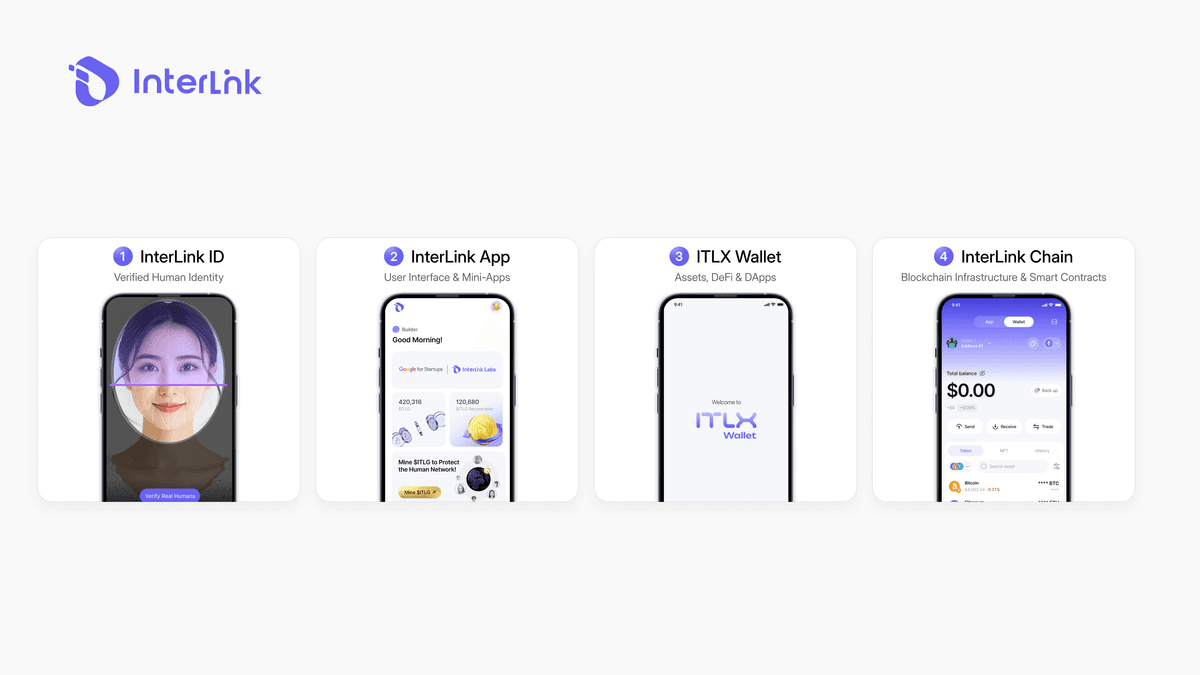
Together, the architecture can be simplified as:
- InterLink ID → verified identity
- InterLink App → user interface & Mini-Apps
- ITLX Wallet → assets, DeFi & dApps
- InterLink Chain → blockchain infrastructure
How ITL and ITLG Fit Into the Ecosystem
ITL and ITLG serve different roles in InterLink's published ecosystem model, so they should not be treated as interchangeable.
- ITLG is associated with user participation and ecosystem-related activities. InterLink's Version 6.0 rollout introduced native ITLG staking on the InterLink blockchain.
- ITL is described by InterLink as the primary payment and settlement currency for the ecosystem. It is associated with payment and blockchain-related utilities within the network.
This creates a broader ecosystem flow:
Users participate through the InterLink App → manage supported assets through ITLX Wallet → use supported applications and services → interact with blockchain infrastructure through InterLink Chain.
The exact availability and functionality of individual token features can change as the network develops, so users should verify the current status in the official app and InterLink channels.
Developer Integration
The ecosystem is not only designed for end users. InterLink also provides development infrastructure for builders. The InterLink Mini-App Development Kit (MDK) provides tools for building, deploying, and scaling decentralized Mini-Apps. Its published modules include authentication, data handling, payments, and on-chain interaction.
This creates another connection within the ecosystem:
- Developers → SDK/MDK → Mini-Apps & dApps → InterLink ID / Wallet / Chain
As a result, the ecosystem connects both sides of the network: users access applications through the InterLink App and Wallet, while developers use InterLink's development tools and blockchain infrastructure to build those applications.
Why This Architecture Matters
Separating identity, user experience, wallet functionality, and blockchain infrastructure allows each layer to serve a specific purpose while remaining connected.
- InterLink ID: Provides the verified human identity layer.
- InterLink App: Provides the main user interface and access to Mini-Apps.
- ITLX Wallet: Provides asset management, DeFi, and dApp access.
- InterLink Chain: Provides blockchain infrastructure and smart-contract execution.
- SDK & MDK: Provide tools for developers building applications within the ecosystem.
For users, this architecture brings several Web3 functions into one environment. For developers, it provides a framework for building applications that can integrate verified human identity with blockchain-based functionality.
Conclusion
The InterLink ecosystem connects verified identity, Mini-Apps, digital assets, and blockchain infrastructure through InterLink ID, the InterLink App, ITLX Wallet, and InterLink Chain. Mini-Apps run within the app, while the wallet provides access to supported assets and dApps, with the chain serving as the underlying blockchain infrastructure. As the ecosystem continues to develop, features and availability may change. Always check the official InterLink App and channels for the latest information.
Disclaimer: This guide is for educational purposes only. Features, supported assets, and availability may change over time.

