


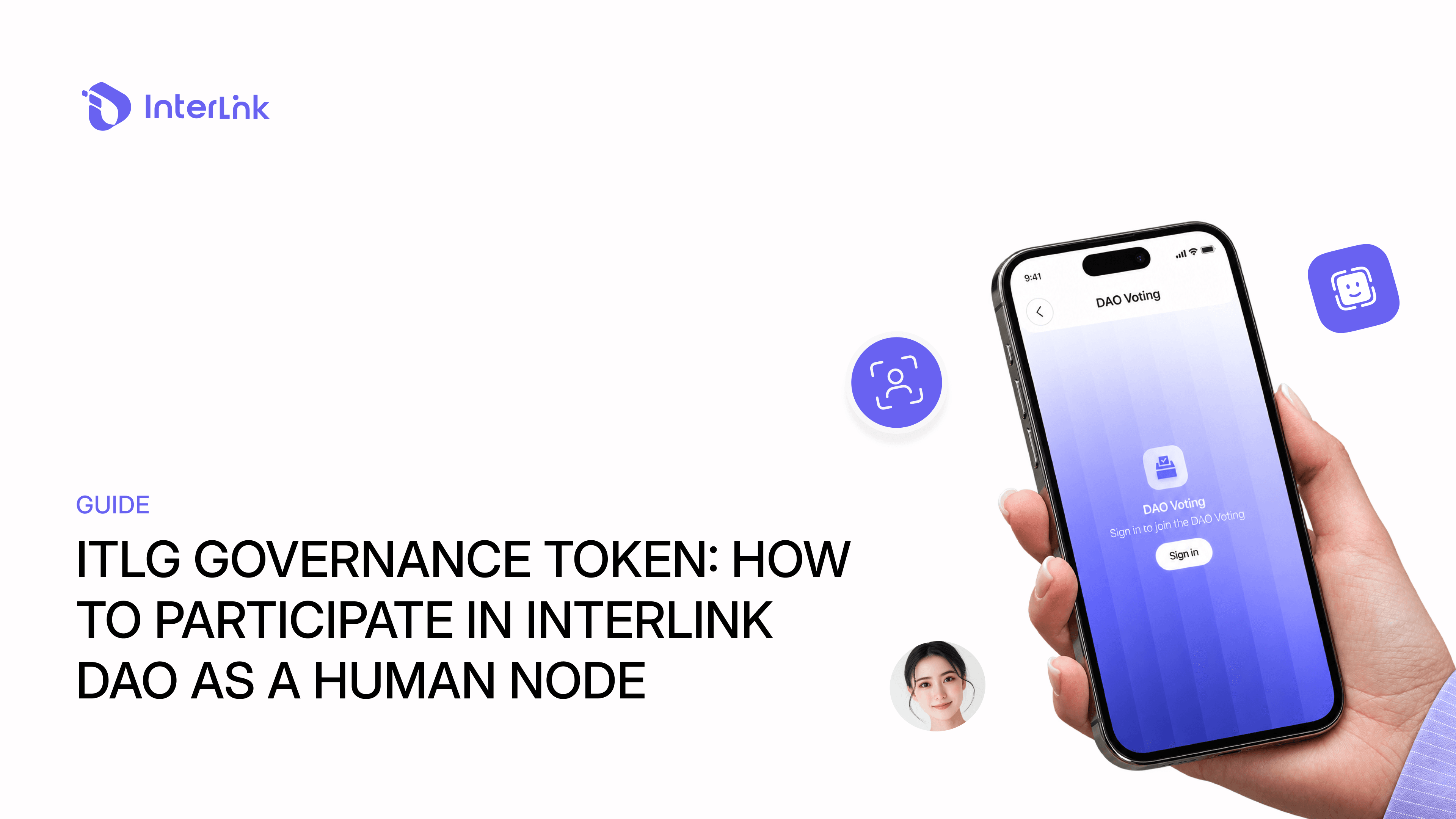
ITLG Governance Token: How To Participate In InterLink DAO As A Human Node
Sep 15, 2026
Our journey
ITLG is more than a reward token. Within the InterLink Labs ecosystem, it gives eligible users a way to participate in the InterLink DAO and contribute to community decision-making. By holding ITLG and participating as a Human Node, you can vote on proposals related to emissions, conversion rules, features, and the long-term direction of the network.
What is a governance token?
A governance token gives its holders the right to vote on proposals that shape a project’s future. Instead of decisions being made only by a central team, token holders can influence parameters such as token emissions, feature priorities, treasury usage, and protocol upgrades. In well-designed systems, governance aims to align the long-term interests of the community with the health of the network.
Key Concept: Governance Token
A governance token is a digital asset that grants voting rights over project decisions. On InterLink, ITLG primarily serves this role for the community and Human Node layer.
How does ITLG governance work on InterLink?
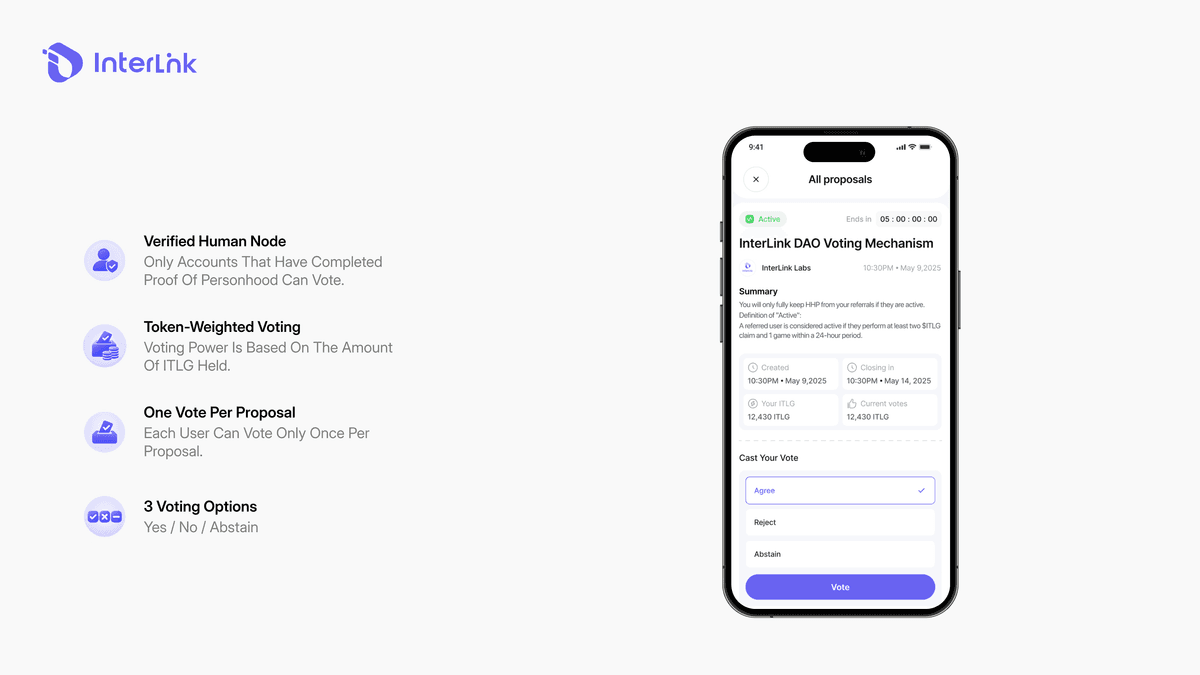
InterLink combines verified human identity with token-weighted voting to create a more Sybil-resistant governance system.
Key principles include:
- Verified Human Node requirement: Only accounts that have completed Proof of Personhood can participate in voting. This enforces a practical “one real person, one account” rule and makes it extremely difficult for bots or fake identities to take part.
- Token-weighted voting power: Each verified user can vote only once per proposal. However, the voting weight equals the amount of ITLG the user holds at the moment of voting. Users with more ITLG have greater influence on the outcome.
- Three voting options: Yes (Approve), No (Reject), and Abstain.
- Progressive decentralization: The system is moving from Foundation-led decisions toward greater community involvement through the DAO.
This structure uses identity verification to block bots and fake accounts, while voting power remains proportional to ITLG holdings - creating a practical balance between anti-Sybil protection and token-based influence.
What can you vote on?
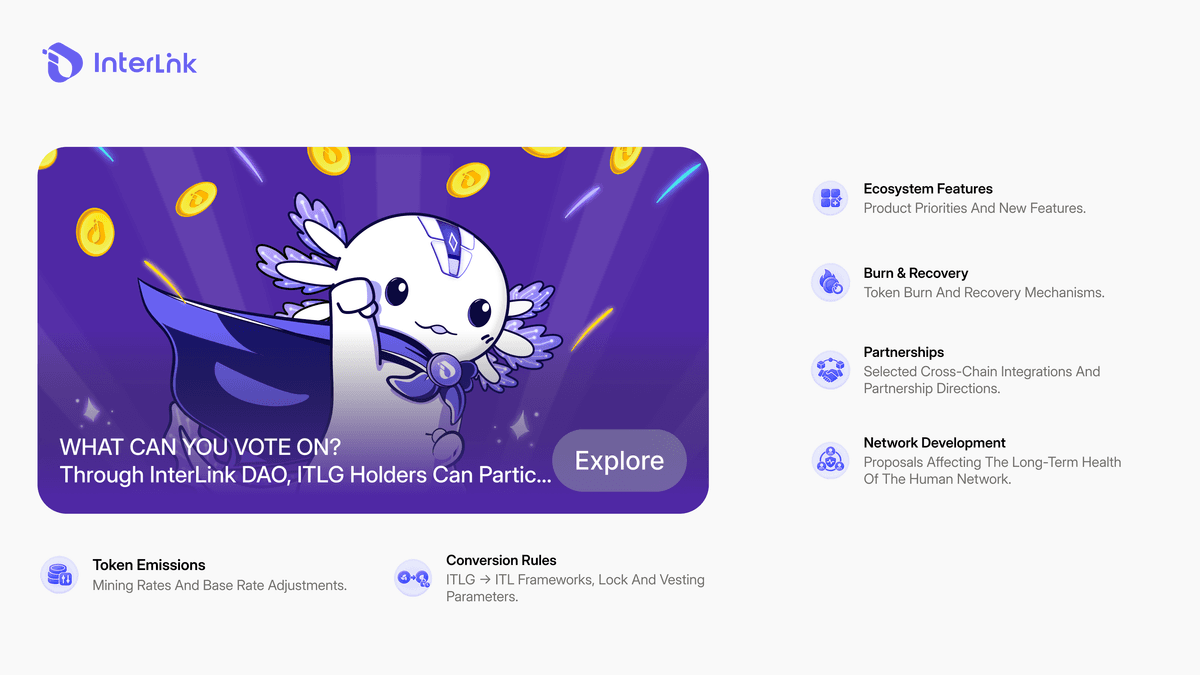
Through the InterLink DAO, users holding ITLG can participate in governance and vote on a range of important topics, particularly those related to the community, Human Node layer, and ITLX ecosystem. These commonly include:
- Token emission rates and Base Rate adjustments
- Conversion frameworks and lock/vesting parameters (for example, the ITLG → ITL staking model)
- Ecosystem features and product priorities within the ITLX domain
- Burn and recovery mechanisms
- Selected cross-chain integrations and partnership directions
- Broader proposals that affect the long-term health of the Human Network
Note that some chain-wide protocol parameters may later combine ITL stake weight with InterLink ID weight as the network progresses toward fuller decentralization. Major decisions are typically published as formal proposals, opened for a fixed voting period, and then finalized after the deadline.
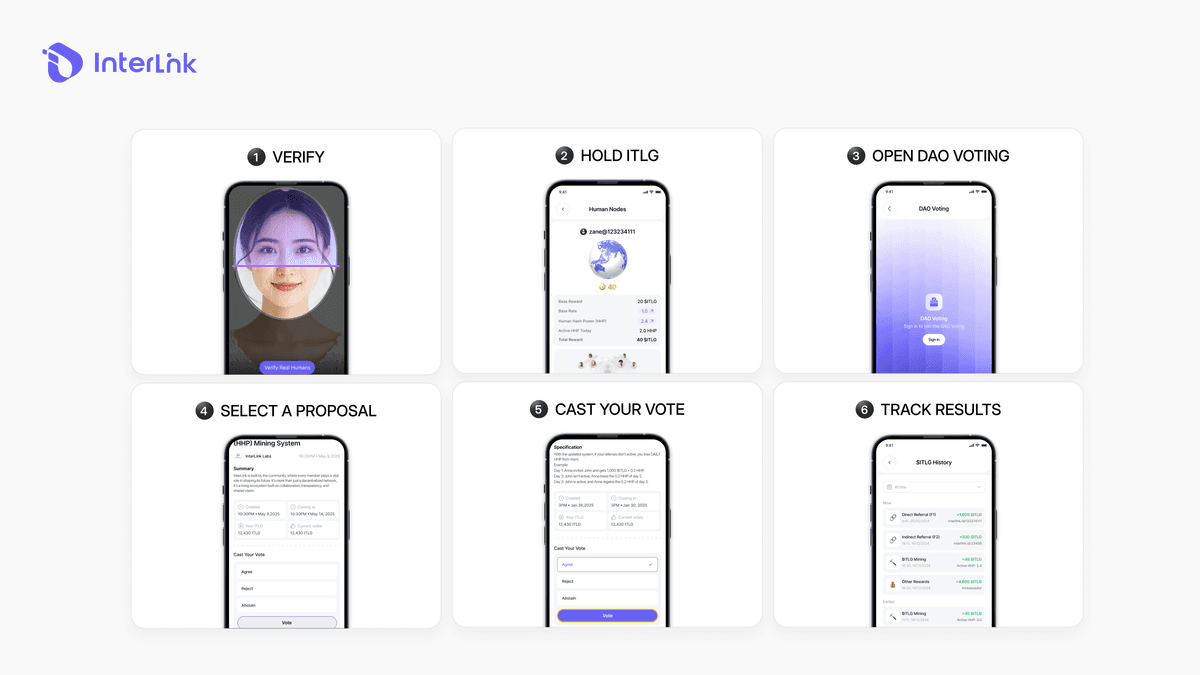
Step-by-step guide: How to participate in the DAO?
Participating is designed to be accessible for verified Human Nodes:
- Step 1 - Complete Proof of Personhood: Finish facial verification in the InterLink app so your account becomes a verified Human Node.
- Step 2 - Hold ITLG: Hold ITLG in your account to participate in DAO voting. Your voting power is based on the amount of ITLG you hold at the time of voting. You do not need a special or separately verified type of ITLG to vote.
- Step 3 - Open the DAO Voting Miniapp: Inside the official InterLink free mining app, go to the Miniapp section and select DAO Voting.
- Step 4 - Choose an active proposal: Select the proposal you want to vote on and tap “Vote now”.
- Step 5 - Cast your vote: Choose one of the three options: Yes, No, or Abstain. Confirm your choice.
- Remember: You can vote only once per proposal. Your voting power = the amount of ITLG you currently hold.
- Example: If User A holds 1,000,000 ITLG and votes Yes, the Yes tally increases by 1,000,000. If User B holds 5,000 ITLG and votes No, the No tally increases by only 5,000.
- Step 6 - Track the result: You can follow the live Overview of each proposal and review your own voting history in the Vote history section. Results are published after the voting period ends.
Always use only official channels and double-check proposal details before voting.
Real-World Example: DAO Proposal 16
DAO Proposal 16 is a clear illustration of community-driven decision-making. The proposal asked the community to choose among different conversion frameworks for turning ITLG into ITL (including lock and vesting options). Machine-learning models generated balanced scenarios, but the final choice was left to ITLG holders through the DAO vote.
The community selected the Balanced Growth option. This decision set the conversion ratios and vesting timelines that the ecosystem uses today, showing that major economic parameters can be shaped directly by verified participants.
Conclusion
ITLG functions as the community governance token of InterLink. Combined with Proof of Personhood, it gives verified Human Nodes the ability to vote on DAO proposals that shape emissions, conversion rules, features, and the broader direction of the network.
Voting is identity-gated (only verified Human Nodes can participate) and token-weighted (influence is proportional to the amount of ITLG held). This design blocks bots while still allowing larger holders greater influence, creating a practical balance between anti-Sybil protection and token-based governance. As the DAO continues to evolve, active Human Nodes holding ITLG remain positioned to help steer the ecosystem’s future.
Disclaimer: This guide is for educational purposes only and does not constitute financial advice. Always verify the latest governance rules and proposals through official channels: Interlink.foundation and the project whitepapers.
Learn more about how ITL and ITLG work together in our guide to InterLink's tokenomics.

