



What Is Fractional Ownership? Guide To Crypto Asset Sharing
Oct 23, 2026
Our journey
Fractional ownership allows multiple individuals to co-own high-value assets for as little as $100. Blockchain, tokenization, and smart contracts enhance accessibility, transparency, and liquidity in this model. This article provides a concise overview of how fractional ownership works in crypto, along with its benefits and key considerations.
What Is Fractional Ownership?
Fractional ownership divides asset ownership among multiple parties instead of a single entity. Blockchain transforms this tradition by representing ownership as digital tokens on-chain. This structural shift lowers entry barriers while maintaining clear records of participation rights.
- The Core Concept Explained: In fractional ownership, participants hold percentage shares of an asset. While traditional shared ownership exists in real estate or private clubs, blockchain converts these interests into transferable digital tokens, lowering investment minimums.
- Fractional Ownership vs. Traditional Ownership: Traditional ownership requires a single investor to fund the full purchase price and manage the asset directly. Fractional ownership lets multiple investors pool smaller amounts, sharing financial exposure and management responsibilities proportionately.
- Why This Matters for Everyday Investors: This model democratizes access to expensive markets such as real estate and fine art. By dropping minimum commitments to around $100, on-chain fractionalized real-world assets have expanded rapidly, though investors must still evaluate underlying risks carefully.
How Fractional Ownership Works in Crypto
Crypto mechanisms provide the technical infrastructure for tokenizing and transferring asset shares on-chain. Smart contracts execute pre-defined rules to handle distributions, governance, and trading automatically. However, holding a token requires robust legal frameworks to ensure an enforceable claim to the physical asset.
Tokenization: Turning Assets Into Digital Units
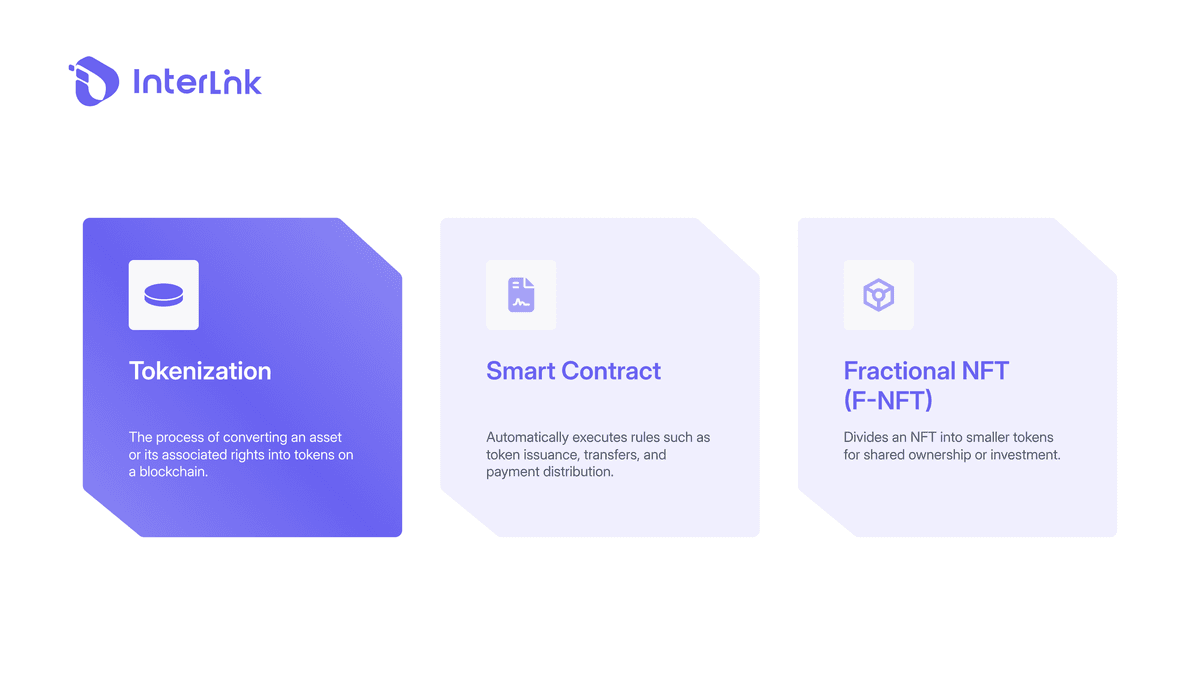
Tokenization maps physical or financial assets to digital tokens on a blockchain. For instance, gold reserves can be divided into fractionated tokens where each token grants a fractional claim, provided the issuer maintains verified reserves and legal compliance.
Smart Contracts: The Engine of Fractional Ownership
Smart contracts automate token issuance, ledger updates, and payout distributions according to programmed parameters. They streamline secondary trading without traditional brokers, although legal oversight and operational security remain necessary.
Fractional Non-Fungible Tokens (F-NFTs)
F-NFTs lock an ERC-721 NFT into a contract that issues multiple fungible ERC-20 tokens representing shares in that unique asset. This grants fractional economic exposure, though legal rights depend on custody agreements and governance rules.
What Can Be Fractionally Owned?
Fractional ownership spans various sectors, each carrying different operational structures and risk profiles. Real estate, financial products, fine art, and business models are the primary categories utilizing tokenization. Understanding how each asset class is structured is essential for prospective investors.
- Real Estate: Investors can purchase property tokens to earn proportional rental yield and capital appreciation starting from low minimums. However, platform-dependency risks exist, making operator stability critical for ongoing distributions.
- Financial Products: Tokenized money market funds and securities, like BlackRock's BUIDL fund, enable 24/7 transferability and settlement across multiple blockchains. Despite enhanced efficiency, these products remain subject to standard financial market risks and compliance constraints.
- Fine Art and Collectibles: Platforms allow investors to buy shares in high-value art or vault-backed physical trading cards. Fractionalizing these collectibles eliminates individual storage burdens while offering exposure to valuable physical items.
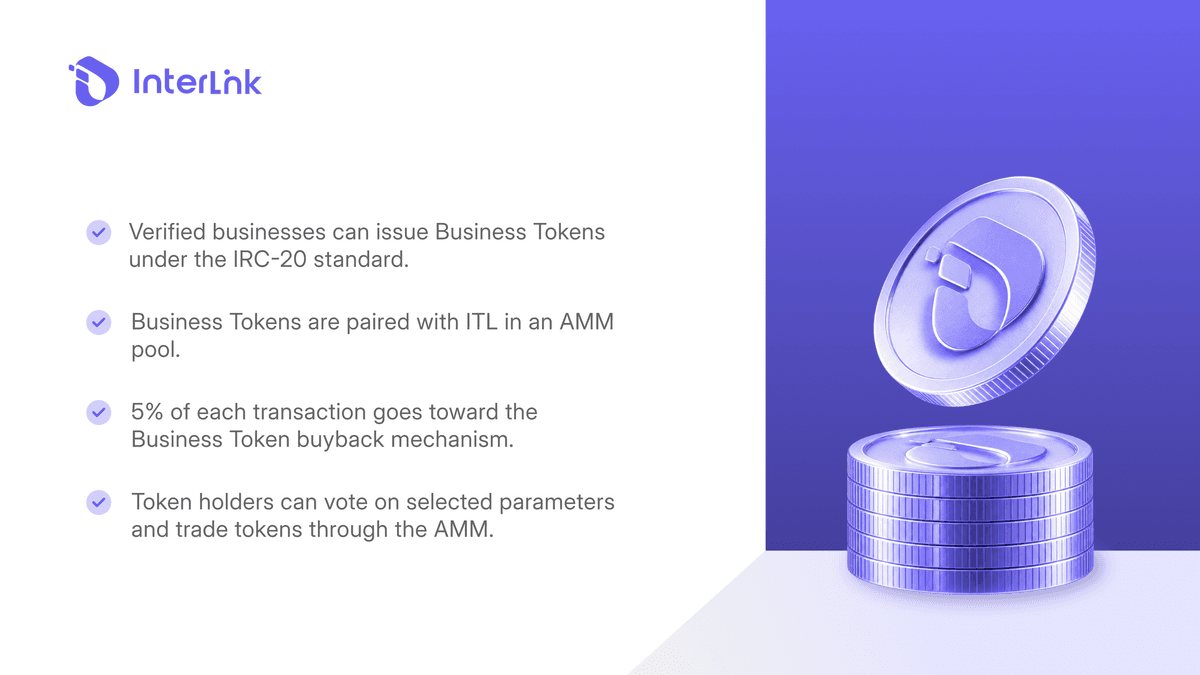
- Businesses and Revenue Streams: Business tokenization connects tokens to specific economic activities, liquidity pools, or protocol revenue mechanisms. These tokens grant specific economic or governance rights rather than traditional corporate equity or direct dividend payments.
- Fractional Ownership on InterLink Labs: InterLink Labs utilizes business tokens and its free mining app model to lower participation barriers in business ecosystems. Participants should review the specific liquidity, terms, and rights tied to each token model before investing.
Benefits of Fractional Ownership
Fractional ownership unlocks opportunities for retail investors by lowering capital requirements and enhancing asset liquidity. Spreading funds across various fractional assets enables effective portfolio diversification. Professional management further reduces the personal operational burden of maintaining assets.
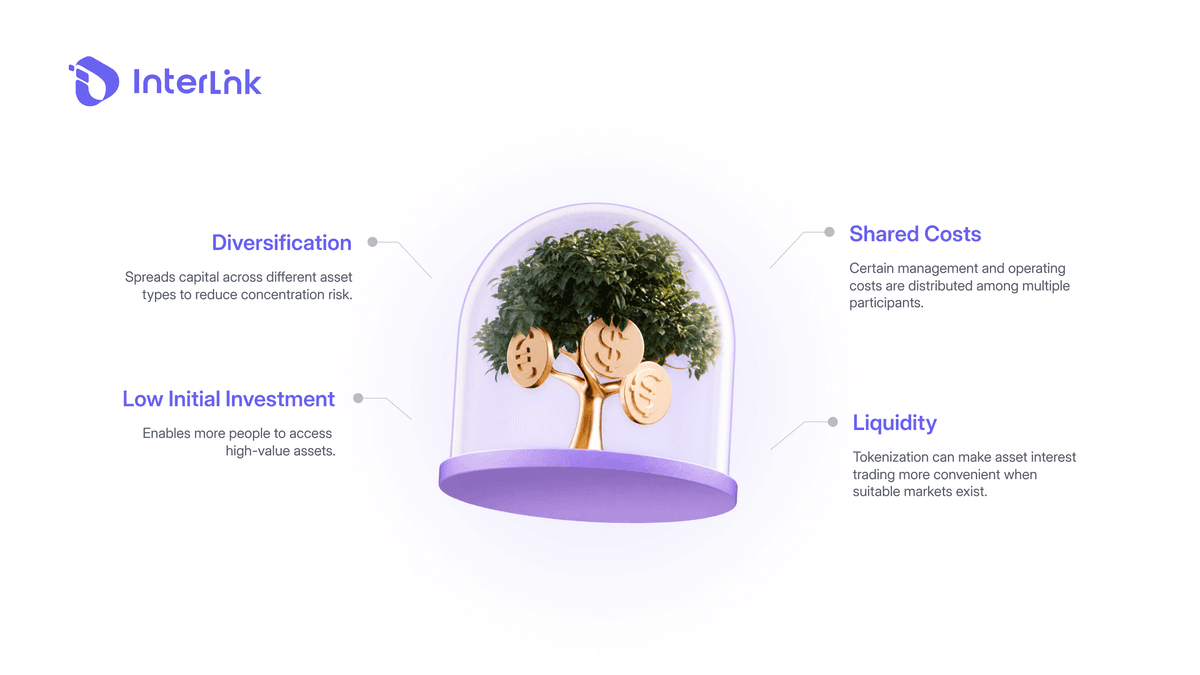
- Lower Barriers to Entry: Reduced entry minimums allow individuals to participate in premium markets that previously required massive capital outlays.
- Diversification and Risk Sharing: Investors can allocate capital across multiple fractionalized assets rather than concentrating risk in a single holding.
- Shared Management and Lower Costs: Ongoing maintenance and management responsibilities are shared among owners or delegated to professional managers, though platform fees apply.
- Liquidity for Traditionally Illiquid Assets: Token trading on secondary markets improves transferability for historically illiquid assets, subject to market demand and trading restrictions.
Limitations and Considerations
Despite its benefits, fractional ownership involves notable constraints and risks. Smaller stakes mean lower absolute returns, and governance authority is often minimal. Investors must also account for regulatory changes and platform dependencies before committing funds.
- Smaller Individual Returns: Financial gains are proportional to the percentage owned, meaning smaller initial capital leads to smaller overall monetary yields.
- Limited Governance Control: Minority token holders typically have limited voting power or influence over major operational decisions and asset sales.
- Transferability and Platform Dependence: Investors rely heavily on platform stability for trading and asset management, creating risks if a platform faces insolvency or legal issues.
- Regulatory Uncertainty: Legal frameworks for tokenized fractional ownership vary globally and remain subject to evolving security regulations.
Conclusion
Fractional ownership combined with blockchain technology transforms investment accessibility across high-value asset classes. By breaking down expensive assets into smaller, tokenized units, it creates broader participation opportunities. However, potential investors must carefully evaluate legal rights, platform reliability, and liquidity constraints before investing.
Disclaimer: The information provided in this article is for educational and informational purposes only and should not be construed as financial, legal, or investment advice. Crypto assets and fractional ownership models involve significant market risk and financial volatility; readers should conduct their own thorough research and consult with a qualified professional before making any investment decisions.

