



What Is InterLink RWA Tokenization? Real-World Assets Explained
Sep 23, 2026
Our journey
InterLink is building a Layer 1 blockchain designed for payments and real-world asset tokenization, with the goal of bringing actual commercial activity on-chain. Unlike traditional RWA platforms that focus on static assets like real estate or treasury bonds, InterLink targets the revenue streams of operating businesses. This guide explains what RWA tokenization means on InterLink, how the Transaction-Backed Digital Assets Protocol works, and why this model matters for the broader Web3 economy.
What Is RWA Tokenization?
Real-world asset (RWA) tokenization is the process of converting physical or traditional financial assets into digital tokens on a blockchain. This allows these assets to be accessed, exchanged, and managed in a more transparent and efficient way.
How RWA Tokenization Works
Tokenized real-world assets are blockchain-based digital tokens that represent physical and traditional financial assets. Their tokenization marks a significant shift in how assets can be accessed, exchanged, and managed. The tokenized RWA market has grown nearly fivefold in three years, reaching 26.4 billion USD in on-chain value, with projections from Boston Consulting Group and Ripple forecasting expansion to 18.9 trillion USD by 2033.
What Most RWA Platforms Tokenize
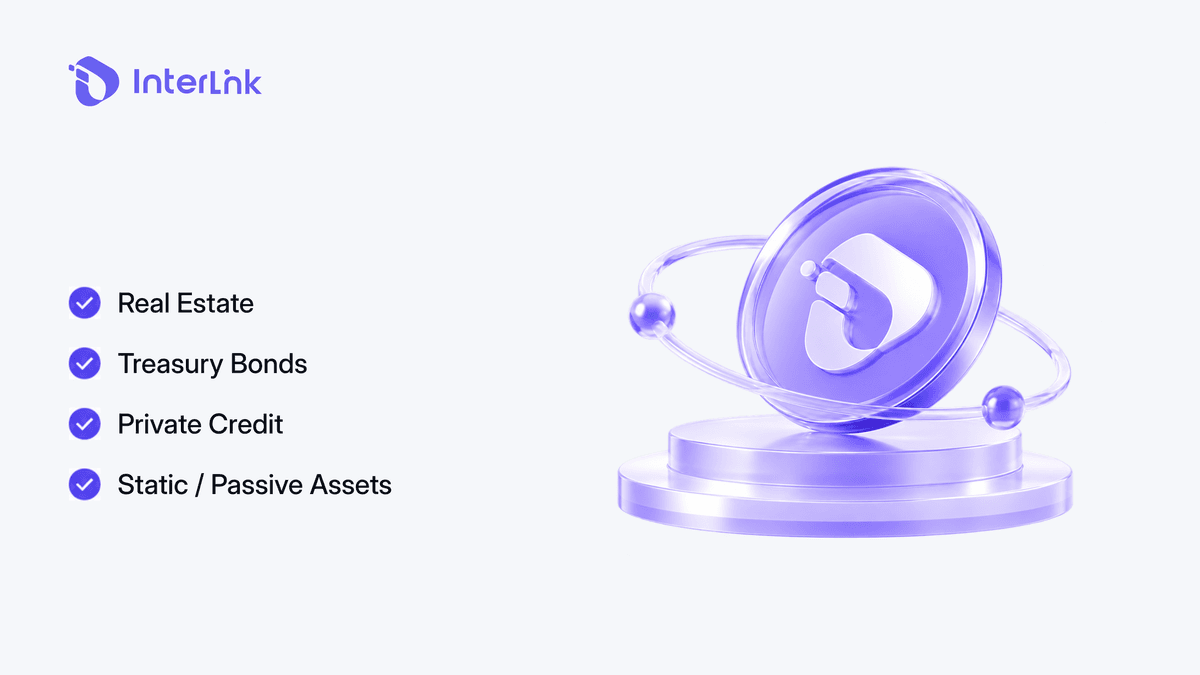
Most current RWA platforms focus on tokenized Treasuries, private credit, and real estate. These are typically static or passive assets that do not generate ongoing operational activity. InterLink takes a different angle by targeting commercial operating revenue as the underlying asset class. This distinction matters because it shifts the focus from holding assets to participating in active economic throughput.
How Does InterLink Approach RWA Tokenization?
InterLink's approach to RWA tokenization is fundamentally different from traditional platforms. Instead of tokenizing static assets, InterLink focuses on the revenue streams of active, operating businesses. Through the broader InterLink ecosystem, users can also engage with its applications, including the free mining app, while businesses access new on-chain models for representing real economic activity.
The Transaction-Backed Digital Assets Protocol
The InterLink Foundation has unveiled the Transaction-Backed Digital Assets Protocol, a new economic architecture that ties on-chain asset value directly to actual commerce rather than speculative trading. This is the first protocol in the InterLink ecosystem designed explicitly for businesses looking to tokenize their operations.
The protocol links everyday business transactions to the creation of on-chain digital assets through AMM infrastructure. Businesses generate revenue that flows into liquidity pools, which use it to buy the business's tokenized assets. Commercial throughput creates real demand.
Business Tokens as a Form of RWA
On InterLink, businesses can tokenize their economic activity into an on-chain digital asset representing real revenue flow. According to the protocol whitepaper, businesses can represent revenue streams, assets, or economic participation rights as on-chain tokens. These tokens become tradable digital representations of real economic value. Unlike traditional RWAs, they represent active operating revenue rather than static assets.
How Does the Transaction-Backed Digital Assets Protocol Work?
The Transaction-Backed Digital Assets Protocol operates through a four-step mechanism that connects real business activity to on-chain asset formation. Step-by-Step Process:
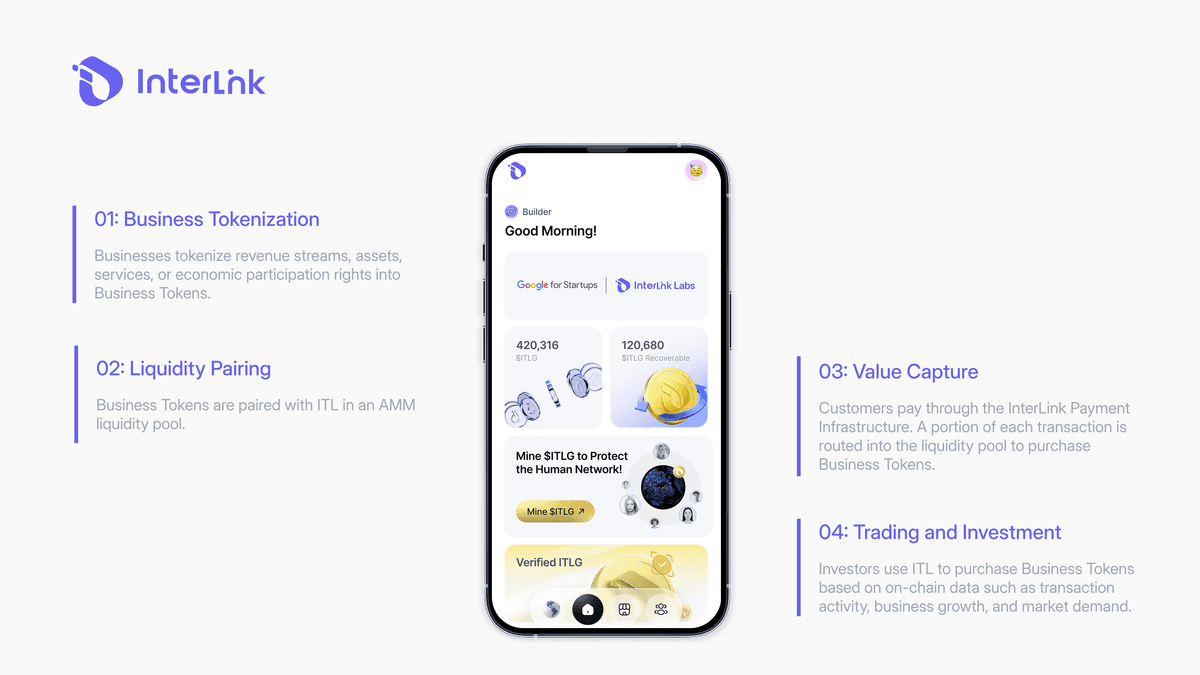
Step 1: Business Tokenization
A business tokenizes its economic activity into an on-chain digital asset representing its real revenue flow. The business registers on InterLink Chain and, after identity verification, can tokenize specific parts of its operations, such as revenue streams, assets, services, or economic participation rights, into a Business Token. Any individual or organization that holds an InterLink ID can integrate their business directly with the InterLink Payment Infrastructure.
Step 2: Liquidity Pairing with ITL
The system creates an Automated Market Maker liquidity pool that pairs the Business Token with ITL, the institutional and reserve token. The protocol is designed to be permissionless and accessible, enabling on-chain transactions, transparent settlement, and programmable financial flows.
Step 3: Transaction-Driven Value Capture
Customers or merchants pay for goods or services through InterLink's payment infrastructure, typically settled in ITL. A portion of every transaction is automatically routed into the liquidity pool, and the AMM uses those funds to continuously buy the business's tokenized assets. This creates sustained demand tied to actual commerce rather than speculation.
Step 4: Trading and Investment
Investors can acquire Business Tokens by swapping ITL. External investors can participate in the ecosystem by investing in tokenized RWAs (business tokens), with investment decisions based on transparent on-chain data including transaction activity, business growth, and market demand. All trading pairs in the ecosystem are denominated through ITL, which functions as the core payment and reserve currency.
Why ITL Is Central to the Protocol?
ITL sits at the center of the Transaction-Backed Digital Assets Protocol. ITL serves as the settlement and reserve layer that anchors the entire protocol. As transaction volume grows, more liquidity enters the system, demand for participating business assets increases, and the cycle reinforces itself. Every Business Token issued under the protocol is paired with ITL in a protocol-embedded AMM pool.
What Is the IBTE Marketplace?
The InterLink Business Token Exchange (IBTE) is a dedicated marketplace designed to bring real-world commercial revenue on-chain. Unlike most token exchanges, IBTE is built specifically for verified operating businesses, giving them a direct path to convert transaction revenue into on-chain liquidity.
How IBTE Differs from Other RWA Platforms
IBTE aims to introduce a verifiable performance layer that most current RWA platforms do not require. By anchoring listed tokens to active business revenue rather than static assets or project promises, IBTE creates a direct link between business performance and token value. Every token listed on the exchange must represent an active, operating business rather than a speculative project.
IBTE as an Alternative to Traditional Capital Formation
InterLink Foundation Chairman KV has set out a vision for the project: build the infrastructure that lets businesses tokenize their economic value and reach investors without the cost and complexity of a traditional IPO. Small and medium-sized enterprises typically lack the scale, legal resources, and underwriting budgets required to list on a major exchange. Tokenization offers a more accessible path to global capital.
The foundation's stated goal is to transform InterLink into a leading ecosystem for global payments and the on-chain tokenization of businesses, enabling tens of thousands of companies to participate in payment infrastructure and capital formation on the platform.
Real-World Use Cases of RWA on InterLink
InterLink's RWA infrastructure is already being used in practical applications that connect on-chain activity to real commerce.
LinkersMap – Real-World Commerce on Mainnet
LinkersMap has officially graduated from testnet and deployed on the InterLink Mainnet, making it the first decentralized application to go live on the network. The platform functions as a global marketplace where users can discover businesses, browse products, and pay with digital assets. Merchants who join gain access to a payment rail that processes transactions on the InterLink chain, with every purchase generating on-chain activity tied to real commercial use rather than speculation.
Within its first two weeks of operation, LinkersMap attracted 700 registered businesses and drew more than 79,000 visitors, generating over 376,000 page views. The platform has since crossed 1,500 registered businesses spanning six continents, with a stated target of 2,000 registered merchants.
How LinkersMap Uses ITL
The ITL token plays a central role in the commerce layer. According to the InterLink dual-token model, ITL is the external payment token built for spendability across shopping, services, and merchant settlements, while ITLG serves as the internal participation and governance token. By routing real transactions through ITL, LinkersMap gives the token a spending use case that goes beyond wallet transfers and gas fees.
Amazon and Real-World Spending
InterLink has given ITL a new function: supporting Amazon shopping directly within the app. Through its own payment system, ITLX Pay, users can now convert cryptocurrency into Amazon orders covering millions of products globally. This represents real consumption rather than just trading on charts.
How RWA Tokenization Creates Value for ITL
The RWA infrastructure on InterLink is designed to create direct and measurable value for the ITL token.
ITL as the Universal Settlement and Reserve Asset
ITL is the infrastructure-layer token and the universal asset of every economic operation on the InterLink Chain. Business tokens issued on the network are embedded within a broader payment and settlement ecosystem rather than sitting as standalone instruments. Every Business Token issued under the Transaction-Backed Digital Assets Protocol is paired with ITL in a protocol-embedded AMM pool, providing built-in liquidity from the moment of issuance.
Transaction-Driven Demand for ITL
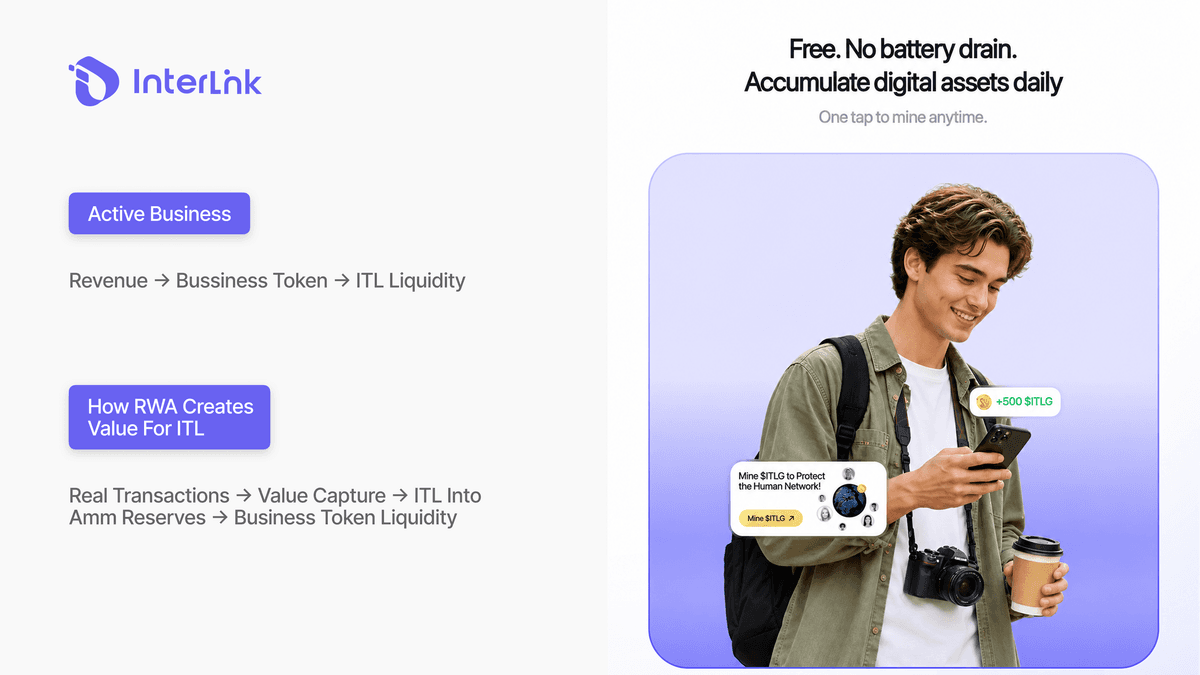
The Value Capture mechanism ensures that every payment routed through InterLink's infrastructure generates demand for ITL. A configurable share of transaction value flows into the corresponding Business Token's AMM pool, and because every Business Token is paired with ITL, every Value Capture event locks additional ITL into pool reserves and creates incremental buy-side support.
Conclusion
InterLink Lab's approach to RWA tokenization goes beyond traditional asset tokenization by focusing on active business revenue rather than static assets. Through the Transaction-Backed Digital Assets Protocol and the IBTE Marketplace, businesses can tokenize their operations and access global capital without the barriers of traditional finance. For ITL holders, this creates a sustainable source of demand tied to real commerce. As more businesses join the ecosystem, the utility of ITL is designed to grow alongside real economic activity.
Disclaimer: This guide is for educational purposes only and does not constitute financial advice. Features, availability, and supported applications may change. Always verify the latest information through official InterLink channels and the app.

