



What Is ITL Token? Utility, Use Cases, And How To Use It In InterLink
Sep 09, 2026
Technology
ITL is not a speculative token. It is the "cash" of the InterLink ecosystem, designed specifically for payments, settlements, and institutional access. Just as you use dollars or euros to buy goods and services in the physical world, ITL is the currency you use to pay for services within InterLink. This guide explains what ITL is, what it is used for, who it is designed for, and how it compares to other digital assets like Bitcoin.
What Is the ITL Token?
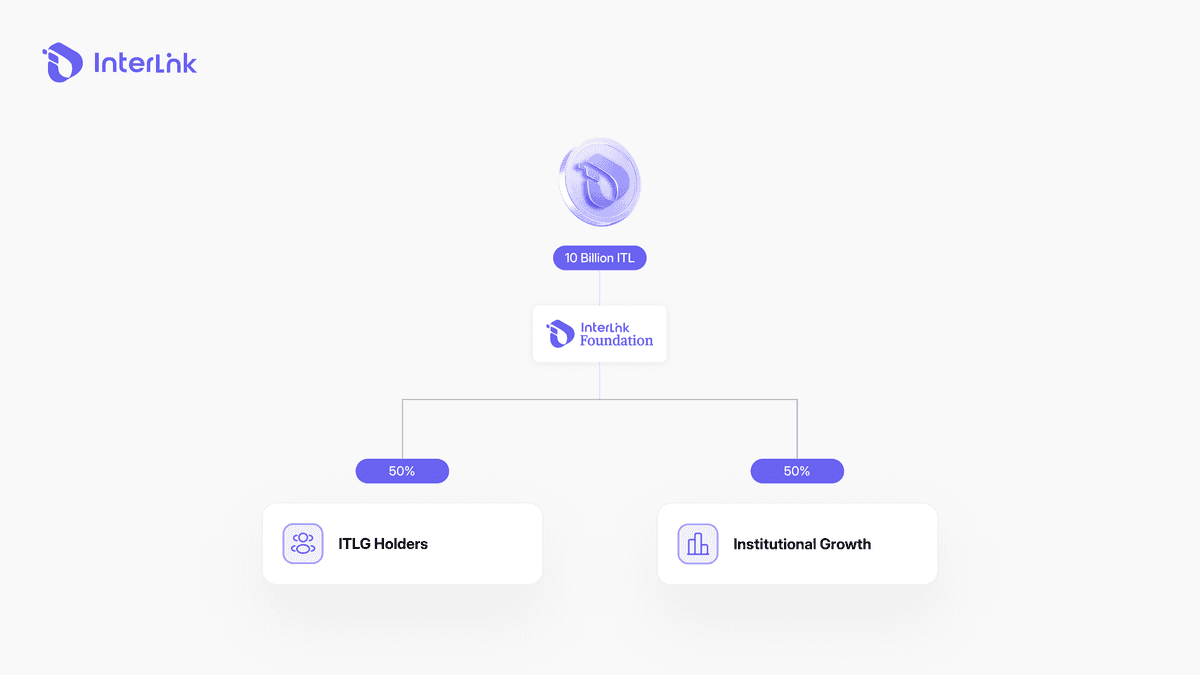
ITL (InterLink Token) is the infrastructure-layer token of the InterLink ecosystem. It serves as the universal asset for every economic operation on the InterLink Chain. ITL has a fixed total supply of 10 billion tokens. This fixed supply is designed to preserve scarcity and long-term value. The token is managed as a strategic reserve asset by the InterLink Foundation, with 50% of the supply allocated directly to ITLG holders and the remainder supporting institutional growth and ecosystem stability.
Key Concept: Utility Token
A utility token is a digital asset designed specifically for use within a particular ecosystem. Unlike security tokens, which represent ownership in a company, utility tokens provide access to products, services, or functionalities. ITL is a pure utility token, it is not a security instrument. Its value comes from its use within the InterLink ecosystem, not from speculative trading.
According to the InterLink Whitepaper, ITL is designed to embody institutional alignment and long-term credibility within the ecosystem. It serves as the economic foundation of the InterLink decentralized human network, providing real utility across the blockchain, dApps, and global user programs.
What Are the Main Use Cases of ITL?
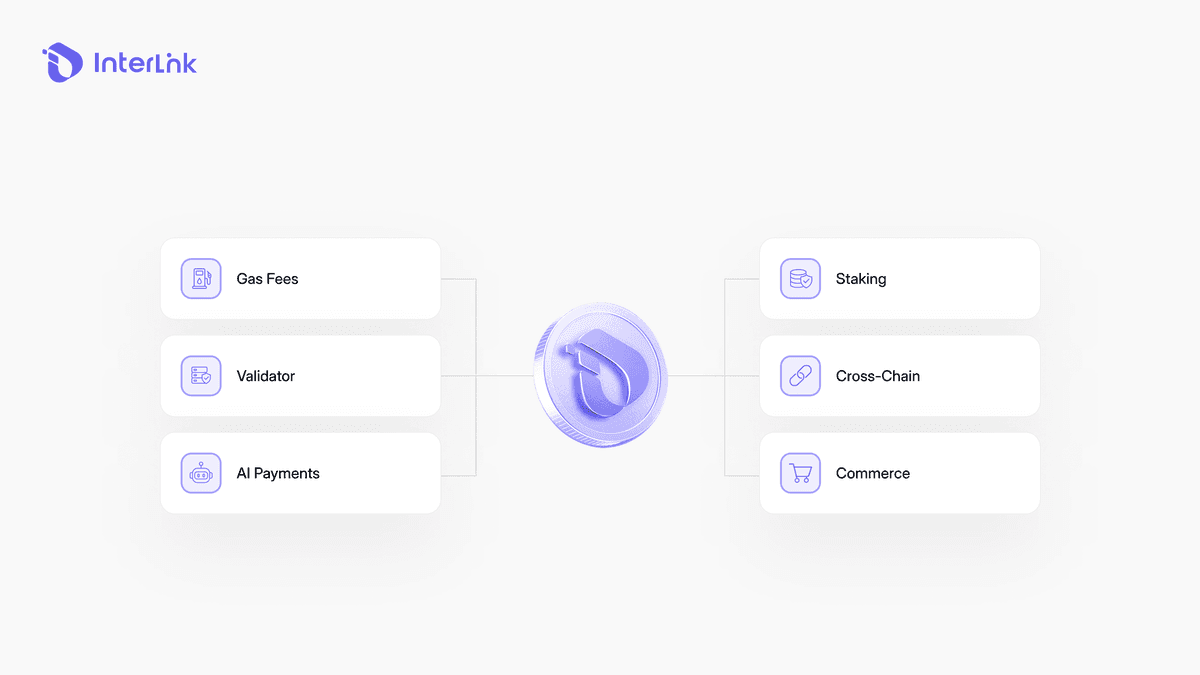
ITL is the most utilized asset in the InterLink economy. Payments, RWA pairings, gas fees, staking rewards, governance votes, and cross-chain settlements all pass through ITL. Below are the key use cases.
- Network Gas Fees: Every transaction on the InterLink Chain requires gas, and ITL is the native token used for that purpose. This includes asset transfers, credential verifications, and all other on-chain activities. dApps within the ecosystem also use ITL for payments and internal settlements.
- AI and dApp Payments: ITL powers service subscriptions for artificial intelligence tools and ecosystem applications. Users can pay for AI services, access premium features, and interact with the growing dApp ecosystem using ITL.
- Real-World Commerce and Payments: ITL is designed for spendability across shopping, hotels, online services, and global markets. Through ITLX Pay, users can purchase gift cards for major consumer brands including Amazon, Apple, Grab, and Starbucks. The InterLink Visa Card, launched in partnership with HPX, allows users to spend ITL at over 50 million merchants across 170 countries.
- Institutional Staking: Partners, protocols, and platforms can stake ITL to gain access to InterLink's Human Layer – its verified user network. This creates a direct connection between institutional participants and the verified human network, enabling secure and trusted access to ecosystem resources.
- Universal Settlement and Reserve Currency: ITL serves as the universal settlement currency for every payment processed through the InterLink Payment Infrastructure. Additionally, every Business Token issued under the Transaction-Backed Digital Assets Protocol is paired with ITL in a protocol-embedded AMM pool. This pairing creates continuous buy-side demand for ITL.
- Cross-Chain and TradFi Bridge: ITL serves as the asset that bridges to other blockchain networks and coordinates with traditional payment systems like SWIFT, ACH, and SEPA. As the ecosystem matures, ITL is designed to serve as a multi-chain settlement reserve.
- Validator Collateral: Validators stake ITL as collateral to participate in BFT consensus. Slashing penalties for double-signing or prolonged downtime are denominated in ITL, ensuring network security through economic incentives.
- Liquidity Provider Yield: ITL is paired with every Business Token in the AMM pool. Liquidity providers earn 0.3% trading fees on every BT/ITL swap, accumulated in the pool and redeemable when the LP position is withdrawn.
- Governance Participation: ITL stake weight, combined with InterLink ID weight, governs all chain-wide protocol parameters including the Value Capture rate, AMM swap fees, validator commission caps, and slashing percentages. This prevents plutocratic capture by token concentration alone.
Who Is ITL Designed For?
ITL is primarily designed for institutions, enterprises, investment funds, ecosystem partners, and other strategic participants that want to access and participate in the InterLink Human Layer. Developed within the broader ecosystem of InterLiabnk Labs, ITL is intended to support interactions between organizations and verified human users while facilitating activities across the network.
Institutions and Enterprises
Institutions and enterprises can use ITL to gain access to the InterLink Human Layer and participate in an ecosystem built around verified human users. By holding and using ITL, organizations can interact with verified participants and access network capabilities that support their Web3 activities.
For enterprises exploring the free mining app and other entry points into the InterLink ecosystem, understanding ITL's role is also important. The token extends beyond individual participation by providing a mechanism through which organizations can engage with the broader network and develop services around verified human activity.
Investment Funds and Strategic Participants
Investment funds and other strategic participants can hold ITL as part of their participation in the InterLink ecosystem. Their involvement can provide additional support for ecosystem development while allowing them to engage with the network as it expands.
Beyond simply holding the token, strategic participants may contribute to ecosystem growth through partnerships, liquidity provision, infrastructure development, or other initiatives. This makes their role different from that of ordinary users and more closely connected to the long-term development of the InterLink network.
Ecosystem Partners
Protocols, applications, and platforms built within or integrated with the InterLink ecosystem can use ITL for settlements, liquidity, and treasury management. Having a common ecosystem asset can help partners coordinate transactions and manage financial activities across different applications.
As the ecosystem expands, ITL can therefore serve as an underlying asset that connects different participants and use cases. This gives ecosystem partners greater flexibility when managing liquidity and conducting operations within the InterLink network.
The InterLink Foundation
The InterLink Foundation manages a strategic reserve of ITL to support the long-term expansion and development of the InterLink ecosystem. The Foundation's role is not limited to holding tokens; it also involves managing resources that can support ecosystem initiatives and strategic relationships.
The reserve can be used to help coordinate incentives among different stakeholders, support institutional partnerships, and provide resources for ecosystem-level initiatives. This allows the Foundation to maintain greater flexibility as the InterLink network develops.
The Strategic Reserve
The ITL strategic reserve is a dedicated pool managed by the InterLink Foundation to support the long-term development, liquidity, and stability of the InterLink ecosystem. It provides the Foundation with resources that can be allocated to strategic initiatives as the network grows.
The reserve serves several important functions:
- Providing liquidity for ecosystem growth: Supporting initiatives and activities that require access to ITL liquidity.
- Supporting institutional partnerships: Providing resources that can facilitate strategic collaborations with enterprises, institutions, and other ecosystem participants.
- Supporting long-term stability: Maintaining resources that can help the ecosystem respond to changing operational and development needs.
- Aligning stakeholder incentives: Helping coordinate the interests of the Foundation, ecosystem partners, institutions, and other participants.
The strategic reserve is not intended to function as a speculative investment fund. Instead, it is an ecosystem management mechanism designed to provide resources for sustainable growth, strategic partnerships, and long-term development. Its effectiveness ultimately depends on how the reserve is managed and allocated in accordance with the broader objectives of the InterLink ecosystem.
How Does ITL Compare to Bitcoin?
The InterLink Whitepaper explicitly states that the ITL and ITLG models are inspired by Bitcoin and Ethereum, respectively.
Similarities to Bitcoin
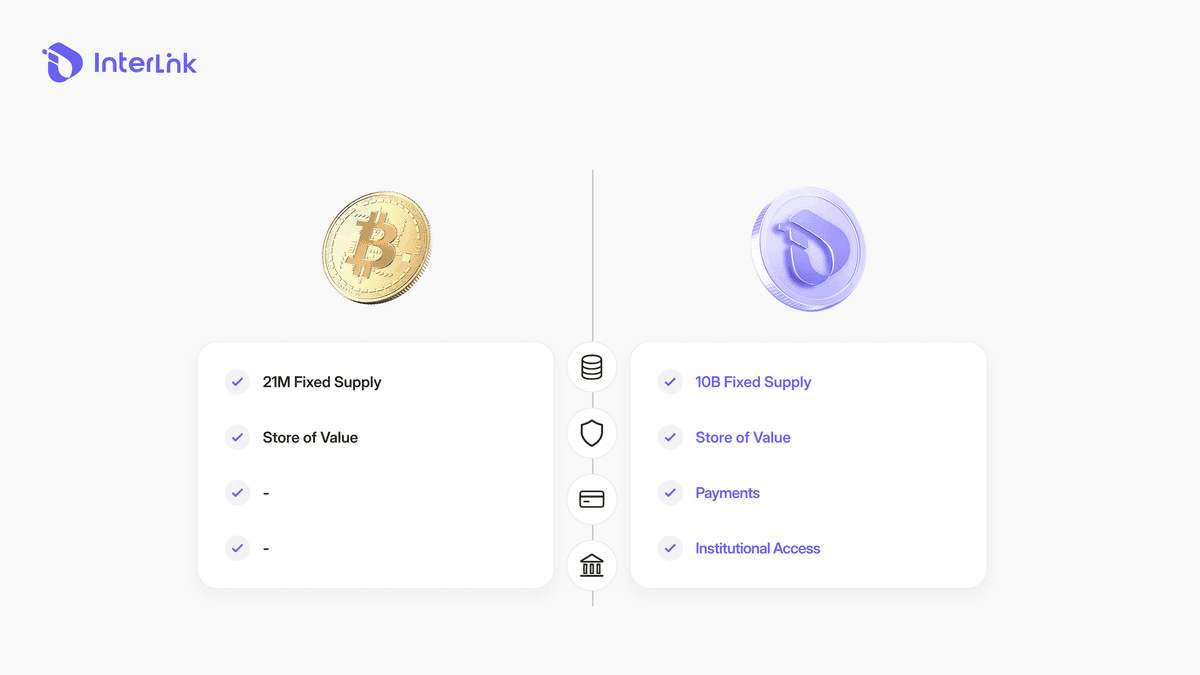
Like Bitcoin, ITL has a fixed supply (10 billion tokens). This fixed supply is designed to preserve scarcity and long-term value, similar to Bitcoin's 21 million cap. Both assets serve as stores of value and reserve assets for their respective ecosystems.
Key Differences
Why the Comparison Matters
The Bitcoin-Ethereum inspiration is intentional. Just as Bitcoin serves as a reserve asset and Ethereum provides utility through smart contracts, InterLink uses ITL as a reserve and institutional asset while ITLG handles user participation and governance.
ITL is not trying to replace Bitcoin. Instead, it applies a similar store-of-value principle within a broader ecosystem that includes payments, settlements, and real-world asset tokenization. As the InterLink ecosystem grows, the demand for ITL is expected to increase through its various use cases.
Conclusion
ITL is the infrastructure-layer token of the InterLink ecosystem. It is the universal asset for gas fees, settlements, institutional staking, real-world payments, and cross-chain bridges. With a fixed supply of 10 billion tokens, ITL is designed to preserve scarcity while providing broad utility across the ecosystem.
Disclaimer: This article is for educational and informational purposes only and does not constitute financial or investment advice. Always conduct your own research before participating in any blockchain project.
Related Article: Want to know about the other token? Learn about ITLG in our next guide.

