


Nov 10, 2026
Technology
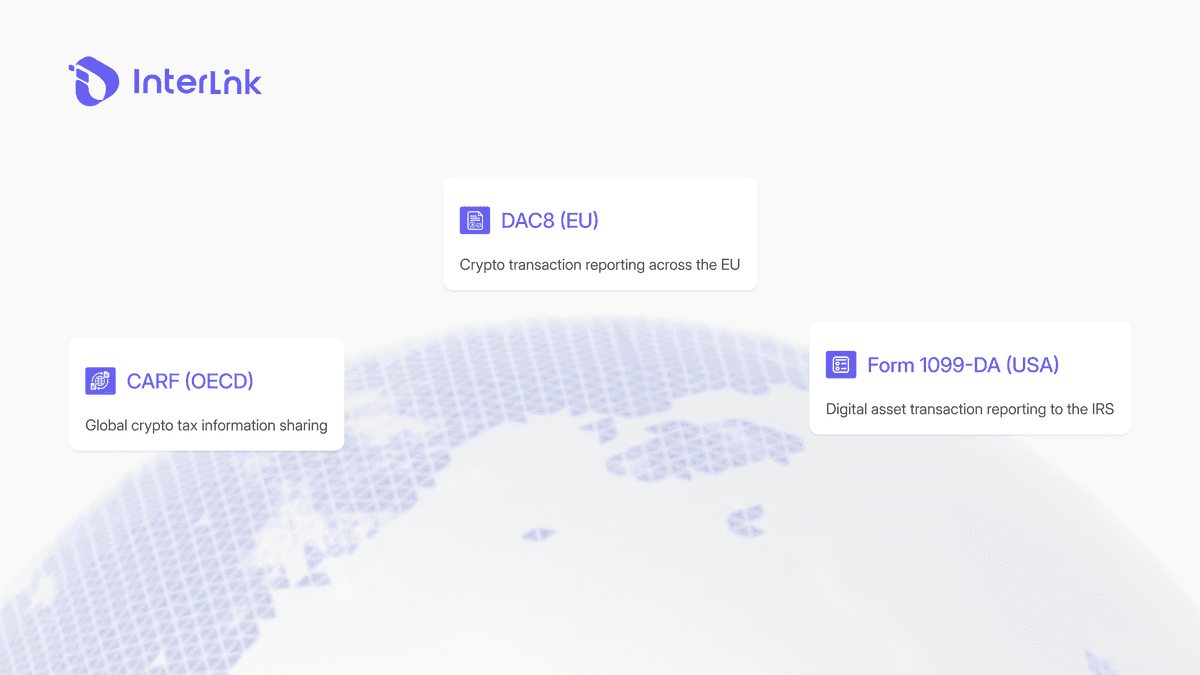
The year 2026 marks a massive turning point in crypto taxation. With the rollout of the OECD's Crypto-Asset Reporting Framework (CARF), the EU's DAC8 directive, and the IRS Form 1099-DA in the US, exchanges are now automatically reporting user transaction data to tax authorities. The era of trading crypto without thinking about taxes has officially ended.
This guide explains why crypto taxes matter more than ever, what triggers a taxable event, how to report crypto taxes step by step, and how to handle staking rewards within the InterLink Labs ecosystem.
Before diving into how to report, it is crucial to understand why 2026 is the year every crypto investor must pay close attention to their tax obligations.
For years, crypto was considered a tax grey area. Many believed that if they never converted crypto into fiat currency, they would not be taxed. This belief is completely false in 2026. Tax authorities around the world now have the tools to track crypto transactions, making compliance mandatory rather than optional.
In 2026, three major reporting frameworks take effect. In the US, Form 1099-DA requires centralized exchanges to report gross proceeds and cost basis to the IRS. In the EU, the DAC8 directive implements OECD's CARF, forcing exchanges to share user data with local tax authorities. The UK's HMRC also adopts CARF starting January 1, 2026. This means tax authorities will know exactly what you traded, regardless of whether you report it or not.
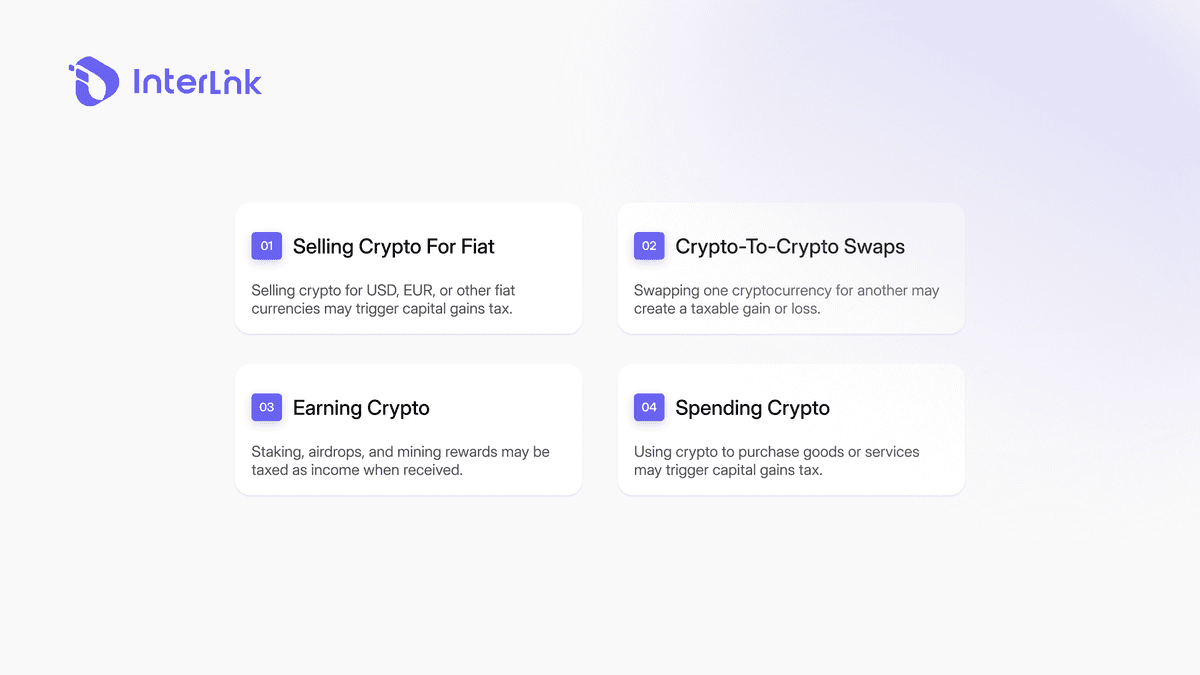
Not all crypto transactions are taxable, but many people are surprised to learn that even swapping one token for another is a taxable event. Here are the most common triggers.
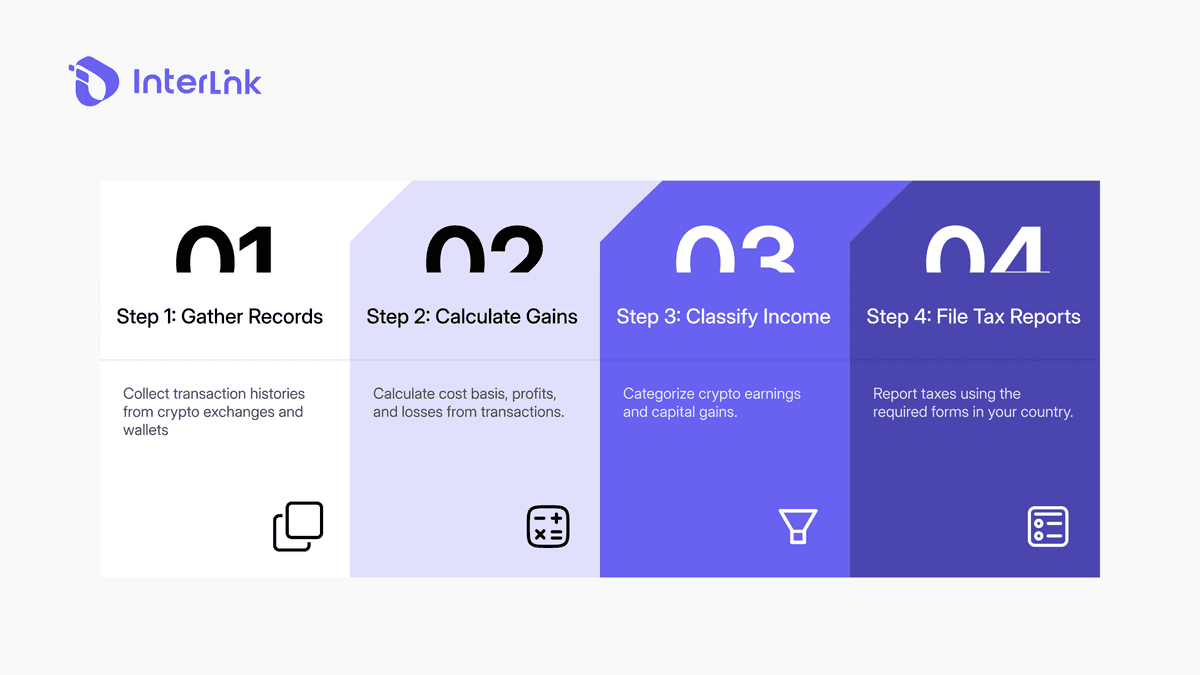
Reporting crypto taxes is not overly complicated if you have a clear system for tracking transactions. Here is the basic process that applies to most jurisdictions.
You need to compile all transaction data from every exchange, wallet, and DeFi protocol you used during the year. This data includes the date, token amount, value at the time of the transaction, and type of transaction. Most major exchanges like Coinbase, Kraken, and Binance provide annual transaction reports.
Cost basis is the original value of the asset when you acquired it. Capital gain is the difference between the selling price and the cost basis. You need to calculate this accurately for every transaction, including fees. If you received crypto from staking or airdrops, your cost basis is the fair market value at the time of receipt.
Income from staking, mining, and airdrops is reported as ordinary income. Gains from selling or swapping crypto are reported as capital gains. This distinction is critical because different tax rates apply to each.
In the US, you report capital gains on Form 8949 and Schedule D, and ordinary income on Schedule 1 or Schedule C. In the UK, you report to HMRC via Self Assessment. In the EU, each country has its own forms, but the general rule is to report both income and capital gains.
For those participating in the InterLink Labs ecosystem, understanding how taxes apply to ITLG staking and earning ITL is crucial to avoid future tax surprises.
When you stake ITLG and receive ITL rewards, the value of the ITL token at the time of receipt is generally treated as ordinary income. This means you need to record the market value of ITL on the day you received it and report it as income. If you later sell the ITL, you will owe capital gains tax on the difference between the selling price and the value at the time of receipt.
If you receive tokens from airdrops or distributions, the value of the token at the time of receipt may be considered taxable income. The specific rules depend on your country. Some jurisdictions only tax you when you sell the token, while others tax you immediately upon receipt.
Because ITL and ITLG are relatively new tokens, tracking the market value at the time of each transaction can be more challenging than with major assets. You should record the date, amount, and reference price at the time of receipt or trade. This will help you calculate your taxes accurately when needed.
Filing crypto taxes is not just about legal compliance. It is also about protecting your assets from unnecessary penalties. Here are the key points to keep in mind.
Crypto taxes in 2026 are not something you can ignore. With CARF, DAC8, and Form 1099-DA in effect, tax authorities globally can automatically track your crypto transactions. Understanding taxable events, calculating cost basis and capital gains, and filing the correct forms is the responsibility of every investor.
For users staking ITLG, recording the value of ITL at the time of receipt is a critical step for compliance. If you are just starting your Web3 journey through a free crypto app or a free mining app, build the habit of tracking your transactions from day one. It will save you significant time and stress when tax season arrives.
Disclaimer: This guide is for educational purposes only and does not constitute tax or financial advice. Tax laws vary by jurisdiction and change frequently. Always consult a qualified tax professional in your country before filing.
Related Articles:


