


How Does ITLG Burn Work? InterLink Explained
Oct 07, 2026
Technology
ITLG burn is a deflationary mechanism designed to keep rewards focused on active, verified participants. Inactive or long-unverified Human Nodes see their pending rewards reduced through an exponential burn formula, while users who return and maintain consistent activity can recover up to 99% of their burned tokens through the Recovery Burning mechanism. This guide explains how ITLG burn works, including the exact formulas and percentages behind the system.
What Is ITLG Burn?
ITLG burn is a mechanism that permanently removes or reduces a portion of tokens linked to inactive or low-quality accounts. The goal is to discourage bots, inactive accounts, and ensure rewards go primarily to genuine, active Human Nodes.
Key features include:
- Burn targets inactive or long-unverified Human Nodes
- An exponential process reduces pending rewards over time
- A recovery pathway for returning users (up to 99% recoverable)
- 1% of recovered cycles remains permanently burned to uphold scarcity and network discipline
- Part of InterLink’s broader deflationary model
How ITLG Burn Works
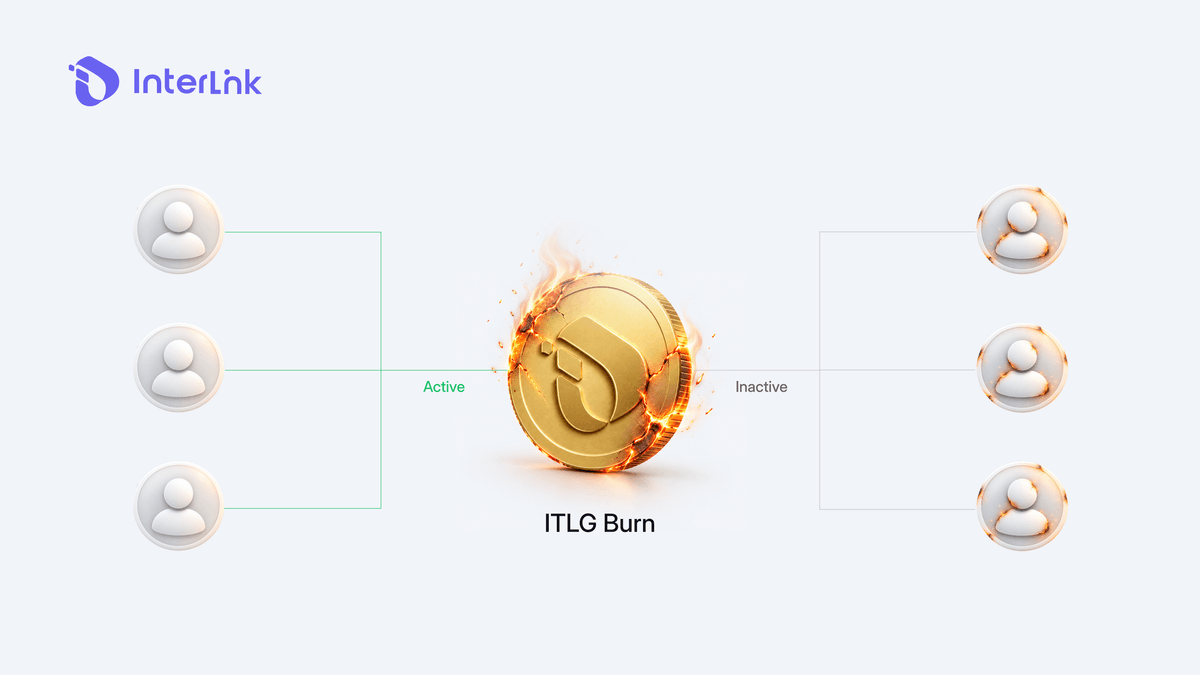
The burn system operates as an automated process that evaluates each user’s activity and verification status. When a Human Node becomes inactive, its unclaimed or pending rewards can be reduced according to the network’s burn rules.
The Exponential Burn Process
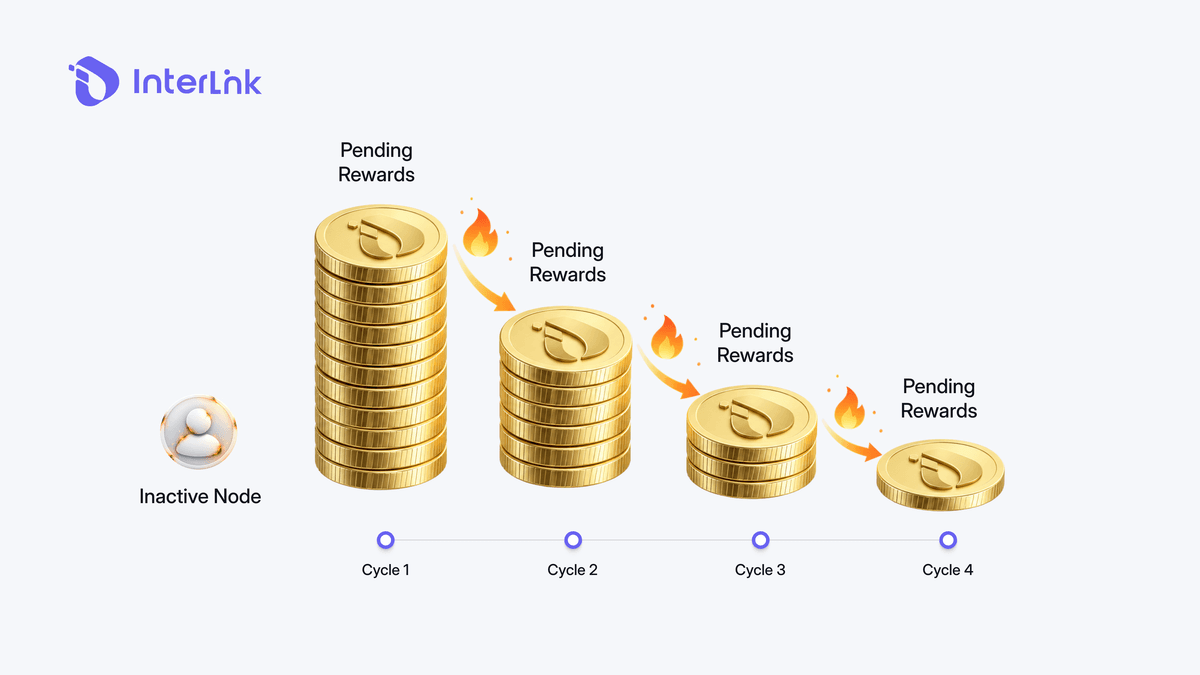
Official materials describe an exponential burn formula applied to pending rewards of inactive or long-unverified nodes. The longer a node stays inactive, the more aggressively pending rewards can decline. Exact parameters may be updated by the project over time.
In community and educational materials, the process is often illustrated as progressive escalation (for example, successive cycles increasing the amount affected), reinforcing that prolonged inactivity becomes increasingly costly.
What “Inactive” Means
Inactivity generally means a lack of regular participation - such as missing check-in / mining sessions over an extended period. The design is progressive: the longer the node stays offline, the faster unverified or pending balances can decline.
What Happens to Burned Tokens
Unverified or inactive balances are returned toward the network (MasterNode) pool. A portion of returned tokens is permanently burned according to DAO-approved rules (commonly described as a percentage per snapshot, such as 1% in recovery-related design). Remaining tokens can flow back into the network’s reward systems.
Important note: Burn primarily affects pending or unverified rewards. The design aims to preserve the principle that consistent past contribution still has a path back through recovery, while inactivity continues to carry a real cost.
The Recovery Pathway – How Users Reclaim Burned Tokens
The Recovery Burning mechanism, introduced through DAO Proposal 14 and later activated, allows users who return and maintain consistent activity to recover a large share of their burned tokens.
How Recovery Works – The Streak-Based Model
Recovery is earned through future contribution, not given automatically:
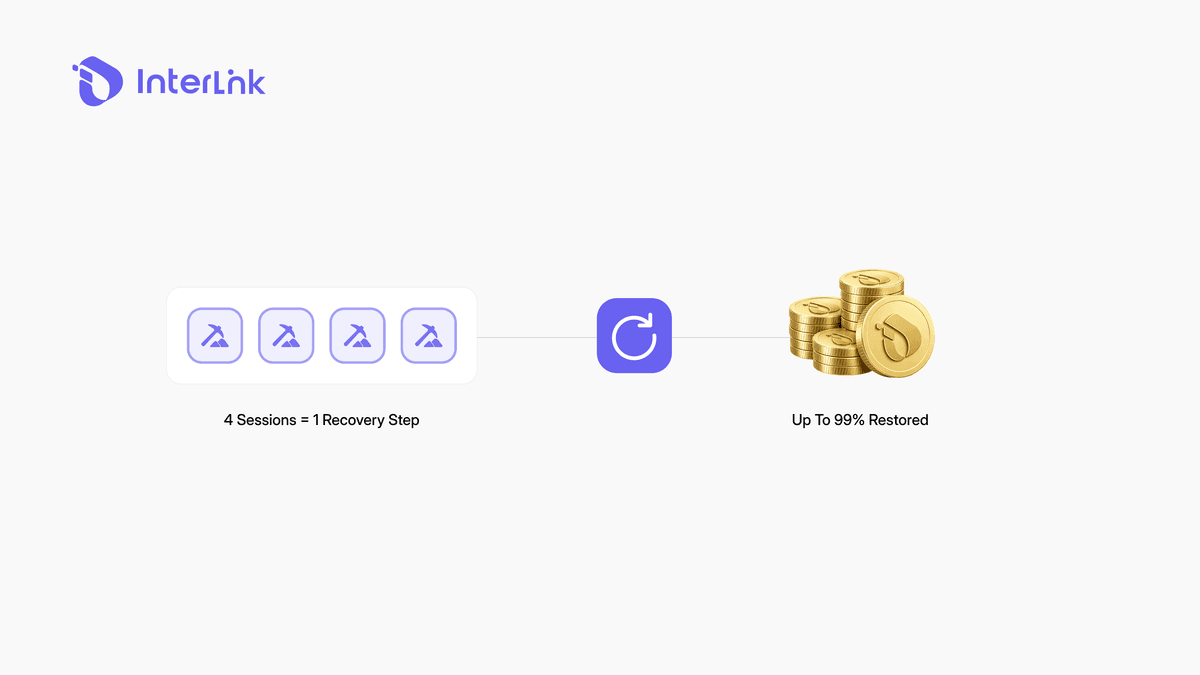
- Every 4 consecutive mining sessions unlock one recovery step
- Each step restores the earliest burned cycle
- Longer streaks unlock higher recovery tiers (for example: 4 sessions → 1 cycle; 8 sessions → next level; and so on)
- Missing a single mining session typically resets the streak to zero
- Users can recover up to 99% of burned ITLG through sustained mining streaks
Following the approval of DAO Proposal 17, the recovery mechanism has been updated to be more user-friendly. Users are no longer required to maintain an unbroken mining streak. Instead, they can accumulate mining sessions at their own pace and claim recovery rewards through a simpler process. Missing a single session no longer resets progress to zero. This change makes the recovery pathway more inclusive for users balancing work, health, or family commitments.
The 1% Permanent Burn
While up to 99% can be recovered, 1% per cycle remains permanently burned. This preserves scarcity and ensures inactivity always carries a lasting cost. Example: If 1,000 tokens were burned, a returning user who fully completes recovery would reclaim about 990 tokens, while 10 tokens stay permanently out of circulation.
Burn History and Verification Priority
A clean burn history can improve verification priority. Users who maintain consistent activity and avoid burns may rank higher in future verification and migration processes. Returning users must prove commitment again through sustained activity.
Referral recovery: When a downline account fully recovers burned ITLG, related referral rewards for direct and indirect referrers can be restored according to the system’s rules.
Why ITLG Burn Matters
Beyond the technical rules, it is useful to understand why this system exists and who it is designed to benefit. The burn-and-recovery design affects active users, returning users, and the long-term health of the ecosystem in different ways.
- For active users: Burn helps ensure rewards go to those who are actively participating. Prolonged inactivity becomes increasingly costly, incentivizing consistent engagement.
- For the ecosystem: Burn reduces idle or low-quality supply and supports scarcity. The permanent 1% component continuously removes tokens from circulation as part of the deflationary design.
- For returning users: The recovery pathway gives a second chance - but only through real effort. Up to 99% can be recovered, so temporary absence does not have to mean permanent loss for users who genuinely return.
- For long-term sustainability: By linking token scarcity to real network activity and verified participation, the burn-and-recovery system supports long-term network health and fairness between consistently active users and those who return.
Summary of Burn and Recovery Mechanisms
To make the full system easier to scan, the table below summarizes the main burn and recovery rules in one place - including what each mechanism does and the key numbers behind it.
Conclusion
ITLG burn is a key mechanism for maintaining reward quality and network integrity. The exponential process targets inactive nodes, while the Recovery Burning mechanism - approved through DAO Proposal 14 - allows returning users to reclaim up to 99% of burned tokens through consistent mining streaks. With 1% permanently burned per cycle, the system ensures inactivity carries a real cost while still providing a path back for genuinely engaged participants. This design balances scarcity, fairness, and long-term sustainability inside the Human Network.
Disclaimer: This guide from InterLink Labs is for educational purposes only and does not constitute financial advice. Exact burn parameters, recovery rules, and app behavior may be updated. Token values can fluctuate. Always verify the latest information inside the InterLink App and through official channels before participating.

