



Crypto Payment Gateway In 2026: How To Accept Crypto
Nov 05, 2026
Technology
Accepting cryptocurrency has grown far beyond online exchanges. Today, it is a major trend in retail commerce. A crypto payment gateway acts as the bridge, allowing businesses to accept digital assets while still receiving fiat currency or managing liquidity easily.
This guide explains how these gateways work, how to accept crypto payments step by step, and how InterLink Labs is revolutionizing the space with ITLX Pay, LinkersMap merchant payments, and QR code settlement. If you want to see the full user-side flow, read our InterLink Payments guide.
What Is a Crypto Payment Gateway?
To understand how businesses operate with digital assets, it is essential to first grasp the mechanics behind a crypto payment gateway. It is more than just a digital wallet; it is a complete transaction processing system.
Definition and Core Mechanics
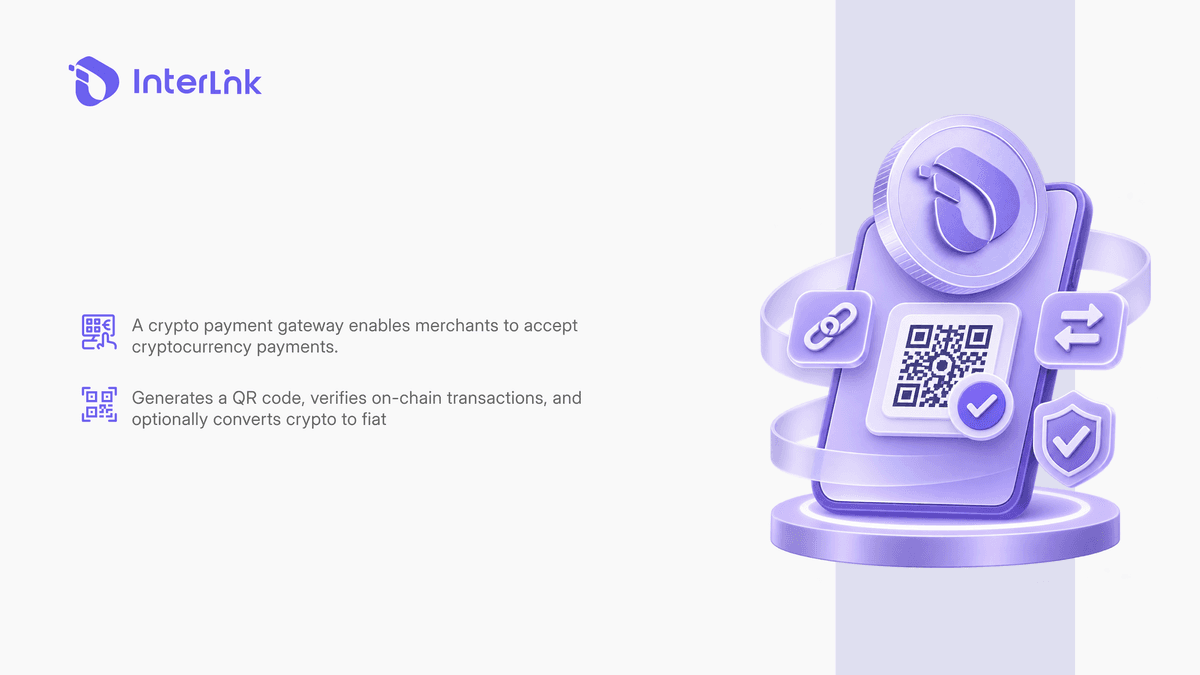
A crypto payment gateway is a software service that allows merchants to accept cryptocurrency from customers. The process involves several automated steps. First, the gateway generates an invoice or a QR code for the customer. Once the customer initiates the payment, the gateway verifies the transaction on the blockchain. It then calculates the real-time exchange rate and, depending on the merchant's preference, can automatically convert the crypto to fiat before sending it to the merchant's bank account.
Why Merchants Accept Crypto Payments
Businesses are increasingly adopting crypto payments for three main reasons. First, it offers lower fees by eliminating the expensive interchange fees of traditional banks. Second, it provides global reach, attracting a large base of crypto holders without foreign exchange barriers. Finally, on-chain transactions are immutable, which means there are no chargebacks and eliminates fraudulent refund disputes.
How to Accept Crypto Payments Step by Step
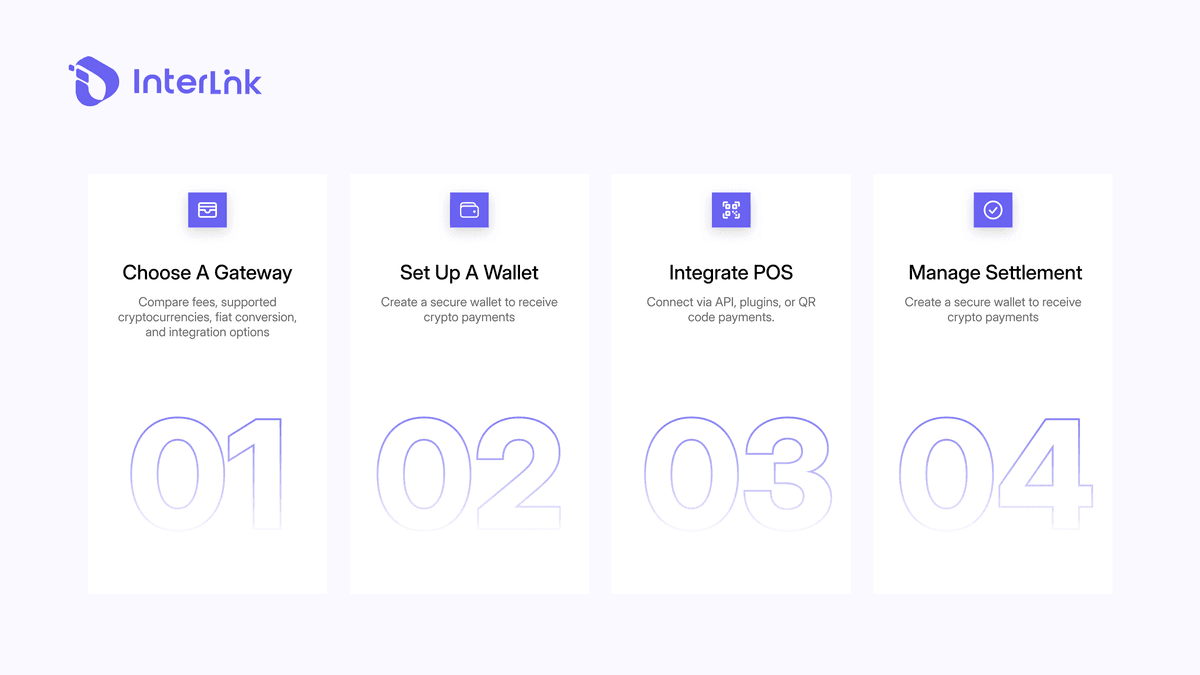
Setting up crypto payments for your business is straightforward when you follow a structured approach. Here is the standard four-step process to get started.
- Step 1: Before anything else, you must evaluate and select a gateway. Base your decision on fees, supported cryptocurrencies, auto-conversion features, and integration capabilities with your current website or store.
- Step 2: Next, create a secure wallet to receive the payments. This is usually a non-custodial wallet, such as the ITLX Wallet, to ensure the safe custody of your incoming funds.
- Step 3: Integration depends on your business model. For online stores, integrate plugins like WooCommerce or Shopify, or use the gateway's API. For physical stores, use dynamic QR codes displayed on a POS screen or mobile app for customers to scan.
- Step 4: Finally, decide on your settlement strategy. You can choose to keep the crypto in your wallet or set up an automatic conversion to fiat to protect your profits from price volatility.
ITLX Pay and LinkersMap: The Ultimate Merchant Solution
While many gateways only handle online transactions, InterLink Labs provides a comprehensive solution that blends digital payments with real-world geo-commerce. By integrating these tools, merchants can bridge the gap between Web3 and physical retail.
ITLX Pay: A Seamless Payment Layer
ITLX Pay is the core payment layer built directly into the InterLink app. Currently, it supports stablecoin payments, which offers crucial price stability for both the buyer and the merchant, removing the volatility typically associated with crypto transactions.
LinkersMap: Connecting Physical Merchants
LinkersMap is a map-based feature that pinpoints crypto-accepting locations. It helps users easily find local stores, cafes, or services that support the InterLink network. This turns crypto into a practical, everyday payment method for consumers.
QR Code Settlement on the InterLink Chain
Transactions are settled directly on-chain using QR codes. The system is verified through Proof of Personhood, reducing fraud and ensuring transparency for both parties. Additionally, sub-cent transaction fees make it highly advantageous for small retail purchases.
Benefits and Challenges of Crypto Payment Gateways
Adopting a new payment technology always comes with a mix of advantages and hurdles. Understanding both sides helps businesses make an informed decision and prepare for the transition.
The Benefits
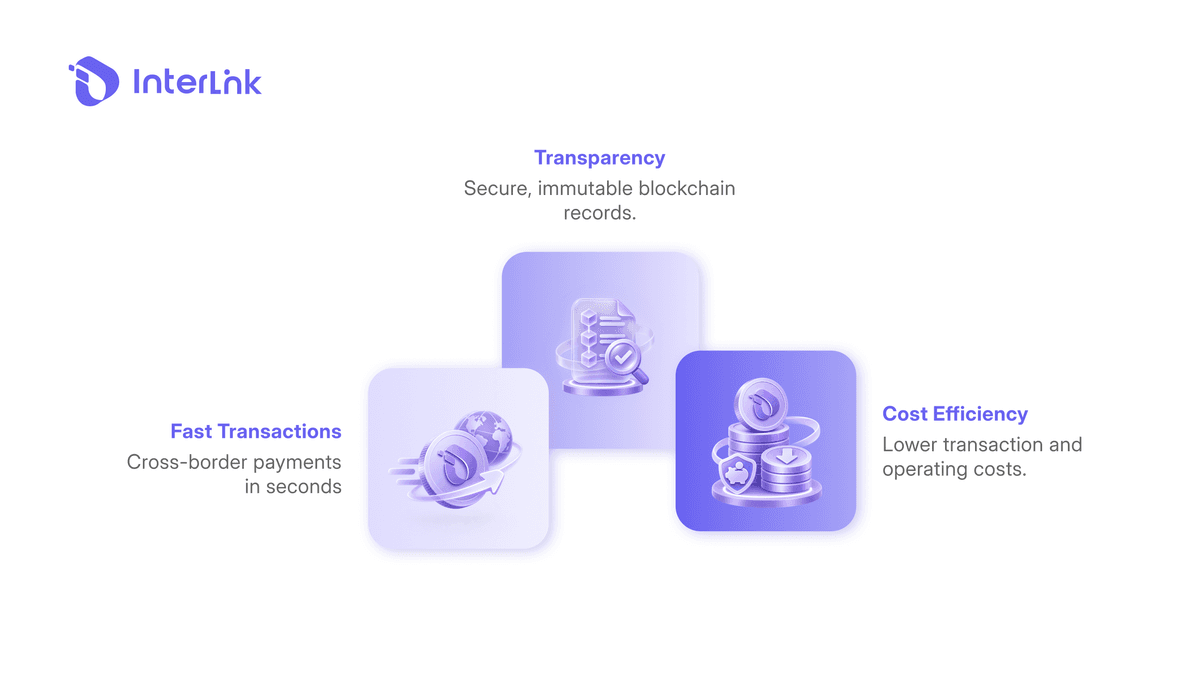
The primary benefits include speed and efficiency. Cross-border transactions settle in seconds rather than days. Furthermore, every transaction is recorded on the blockchain, ensuring complete transparency. Operationally, it saves significantly on costs compared to traditional banking systems.
The Challenges
On the other hand, merchants must manage price volatility if they choose to hold crypto instead of converting to fiat. Using stablecoins can solve this. Another challenge is regulatory compliance, as KYC and AML regulations for crypto-accepting businesses are becoming stricter globally.
Conclusion
A crypto payment gateway is not just a tech trend; it is a strategic move that helps businesses expand their customer base and optimize cash flow. From setting up a simple merchant wallet to integrating advanced QR code settlement, solutions like ITLX Pay and LinkersMap prove that accepting digital assets is highly practical today. For users who started their Web3 journey through a free crypto app or a free mining app, seeing their digital assets accepted at real-world stores is the ultimate proof that Web3 has merged with everyday life.
Disclaimer: This guide is for educational purposes only and does not constitute financial advice. Merchants should conduct their own research and consult with legal professionals regarding crypto payment compliance.
Related Articles:
- Master the user side of payments with our InterLink Payments guide
- Understand how stablecoins eliminate price volatility for merchants
- Proof of Personhood secures on-chain settlements
- Set up your merchant wallet with the ITLX Wallet

