
Nov 18, 2026
Technology
Long wallet addresses are a major friction point in Web3. Web3 domains solve this by mapping complex addresses to human-readable names like alice.itl. This guide explains how to register your own .itl domain as an NFT using InterLink Name Service (INS), including the step-by-step process, benefits, and key risks.
Before exploring the registration process, it is essential to understand what a Web3 domain is and why it has become a foundational element of the modern decentralized web.
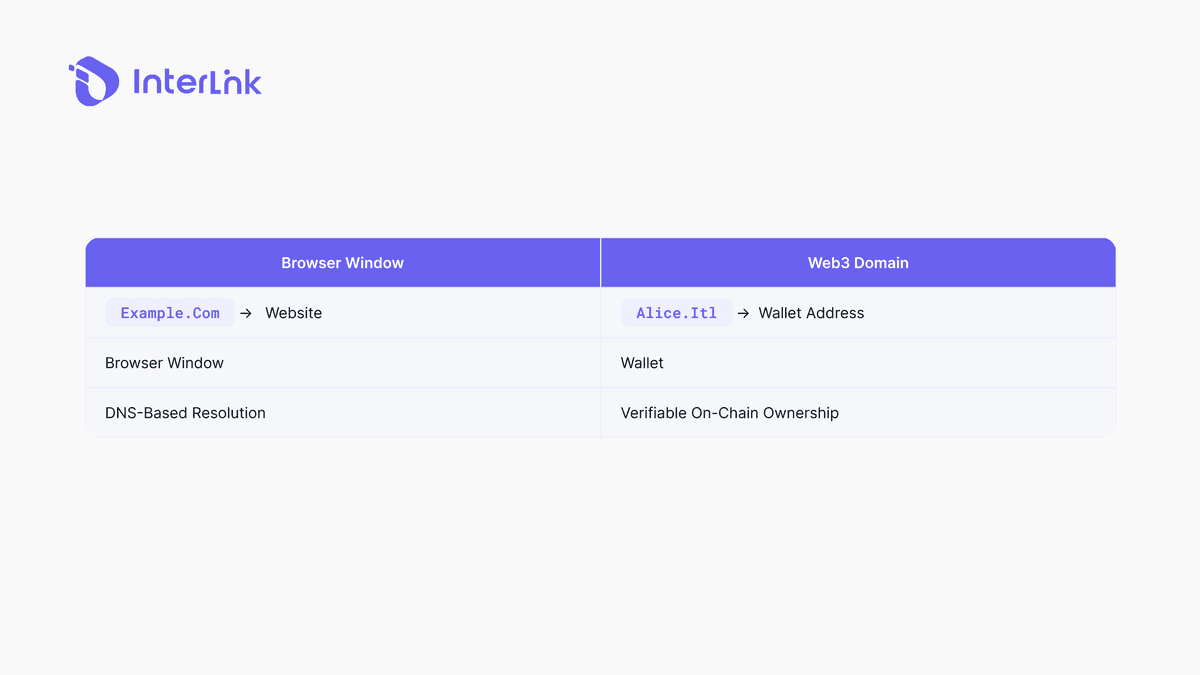
A Web3 domain is a readable name that maps to a blockchain address, smart contract, or decentralized content. It acts as an identity layer on the chain. Unlike traditional DNS domains that are managed by centralized registrars, Web3 domains are stored and governed by smart contracts. Ownership is cryptographically verified on-chain and can be transferred or traded without relying on an intermediary.
Web3 domains improve the user experience by replacing complex addresses with memorable names, drastically reducing the risk of sending funds to the wrong address. They also serve as a digital identity that can link to multiple crypto wallet addresses across different blockchains. Furthermore, because they are minted as NFTs, these domains are digital assets that users truly own and can monetize.
Read more: How The InterLink Ecosystem Works: App, Wallet & Chain
To make decentralized naming accessible, InterLink Labs has introduced INS as a native identity layer on the InterLink Chain. It allows users to claim a unique .itl name and use it seamlessly across the ecosystem.
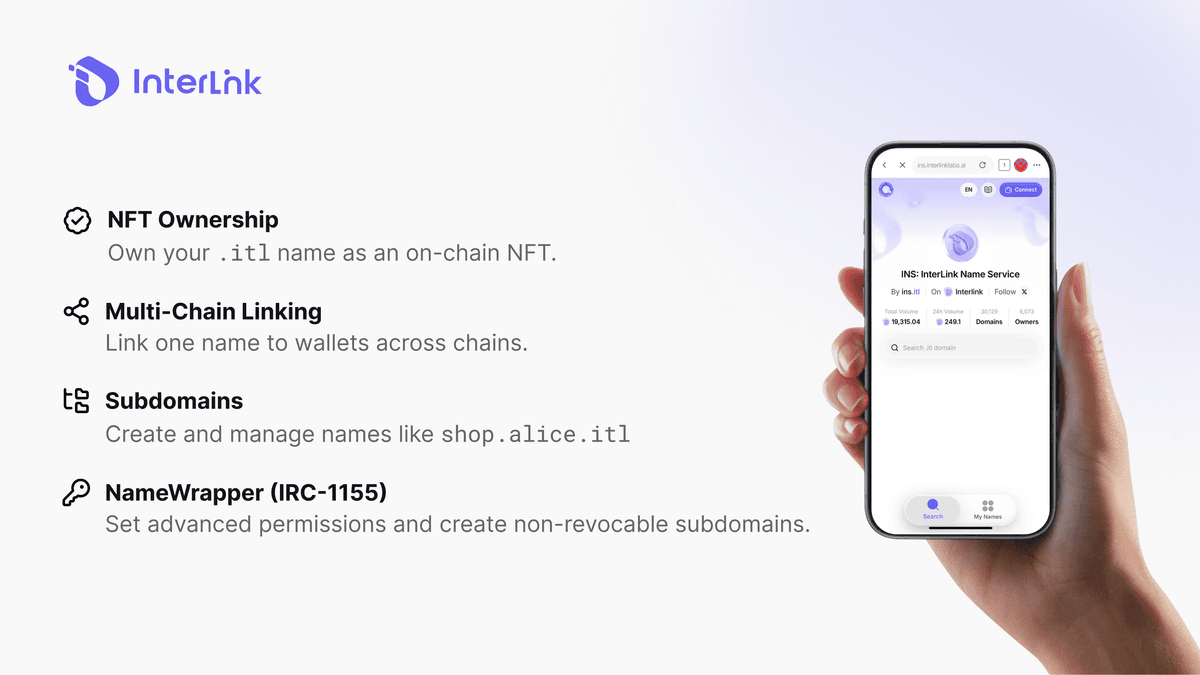
INS is a decentralized naming protocol built directly on the InterLink Chain. When a user registers a name, it is minted as an IRC-721 NFT. This ensures that ownership is verifiable and transferable. INS supports both forward resolution (converting a name into an address) and reverse resolution (converting an address back into a name), making it highly functional for daily transactions.
The protocol offers robust features for power users. It supports multi-chain address linking, meaning one .itl name can point to multiple addresses on various networks. Users can also create and manage subdomains, such as pay.alice.itl, to organize their digital assets. Additionally, advanced permission settings via NameWrapper and IRC-1155 allow for emancipated subdomains that cannot be revoked by the parent domain owner.
Read more: How To Use ITLX Wallet: DeFi, Multi-Chain & Payments
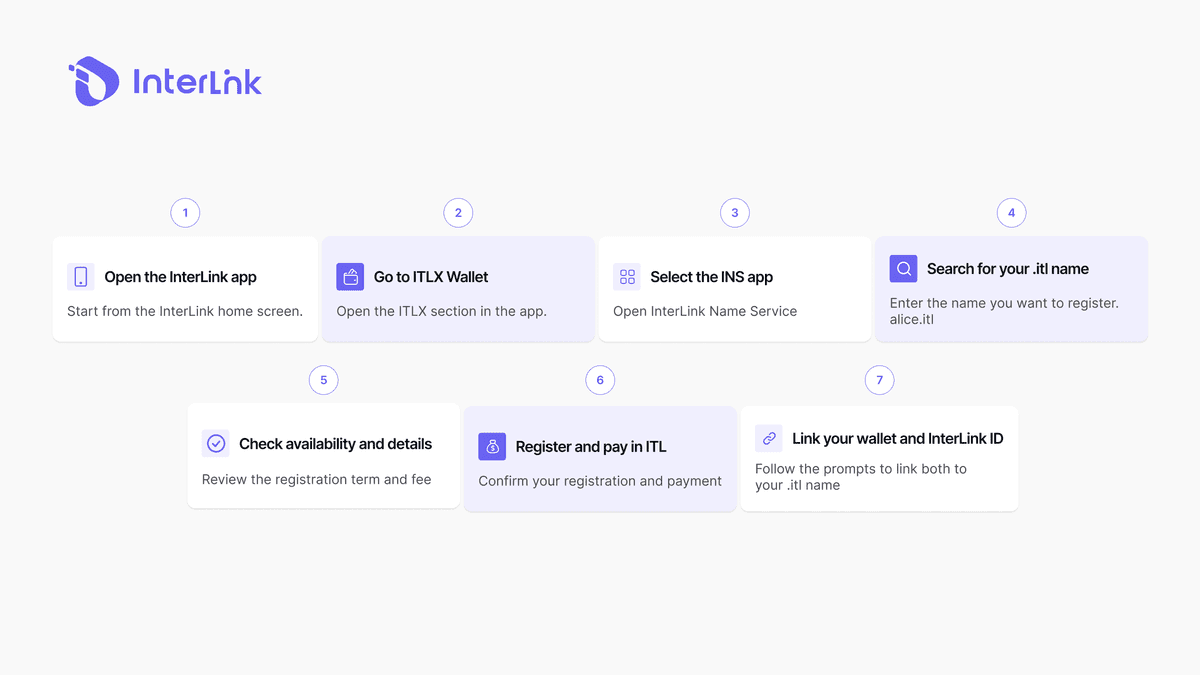
Registering a .itl domain is designed to be straightforward, requiring no advanced technical knowledge. The process is accessible directly through the ecosystem's core applications.
Before registering, ensure you have a verified InterLink ID, as identity verification is required to prevent spam and ensure fair distribution. You will also need a compatible crypto wallet, such as ITLX Wallet, that supports the InterLink Chain. Finally, your wallet must hold a sufficient balance of ITL tokens, as registration fees are paid in ITL and vary based on the length of the name and the chosen duration.
Registrations follow a first-come, first-served model with no auction process. Fees are paid in ITL and are dynamic based on the domain's length and registration period. Users should always check the current fee schedule directly within the INS interface before finalizing a transaction.
Read more: What Is ITL Token? Utility, Use Cases, And How To Use It In InterLink
While Web3 domains offer significant advantages for digital identity and usability, they also carry specific risks that users must manage carefully.
The primary benefit is a vastly improved user experience, making Web3 interactions intuitive and reducing transaction errors. True ownership is another major advantage, as the NFT standard guarantees on-chain control that can be transferred or sold at any time. The flexibility of multi-chain support and subdomain creation adds further utility for personal and commercial use.
The biggest risk is security. If you lose access to the wallet holding the NFT, you lose control of the domain forever. Users must protect their private keys rigorously. Additionally, users should monitor renewal policies and fee structures to avoid losing their domain due to expiration. Finally, market volatility can affect the resale value of premium domains.
Read more: How To Protect Your InterLink Account & Digital Identity (2026 Guide)
A Web3 domain is more than a convenience; it is a core part of your digital identity and an asset on the blockchain. Through InterLink Labs' INS, users can register .itl domains as NFTs, link multiple chains, and manage subdomains effortlessly. The registration process is simple, fees are paid in ITL, and ownership is secured on-chain. For anyone starting their journey through a free mining app or exploring decentralized naming, claiming a .itl domain is a practical first step toward building a lasting digital presence in Web3.
Disclaimer: This guide is for educational purposes only and does not constitute financial advice. Always verify registration details, fees, and renewal policies directly in the official INS interface.
Read more: Mobile Crypto Mining in 2026: Is It Worth It? (Beginner Guide)


