



What Is InterLink Human Credit Score? HCS Explained
Oct 07, 2026
Our journey
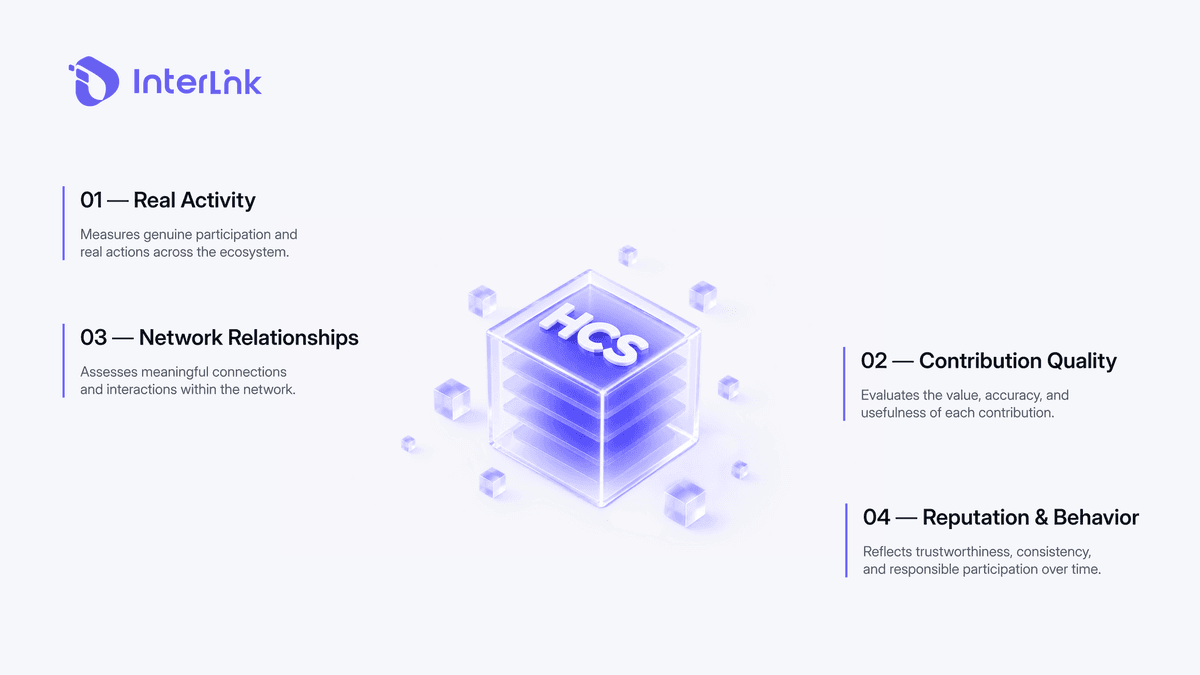
InterLink has introduced the Human Credit Score (HCS), an AI-powered trust evaluation system that measures the credibility of each Human Node based on real behavior and real relationships within the network. Unlike traditional credit scores that rely on financial history, HCS evaluates verified human activity, contribution quality, and network reputation. This guide explains what HCS is, how it works, and why it matters for your participation in the InterLink ecosystem.
What Is Human Credit Score (HCS)?
Before diving into how HCS affects your rewards and access, it helps to understand what it actually measures. HCS is a core component of InterLink's human-centric design, created to reward genuine participation while filtering out bots and low-quality accounts.
Definition and Purpose
The Human Credit Score is an AI-powered metric that assigns a trust score to each verified Human Node. It is calculated based on real behavior and real relationships within the network, rather than financial history or capital holdings. The purpose is to create a reputation layer that reflects the quality of a user's contribution to the ecosystem.
How HCS Differs from Traditional Credit Scores
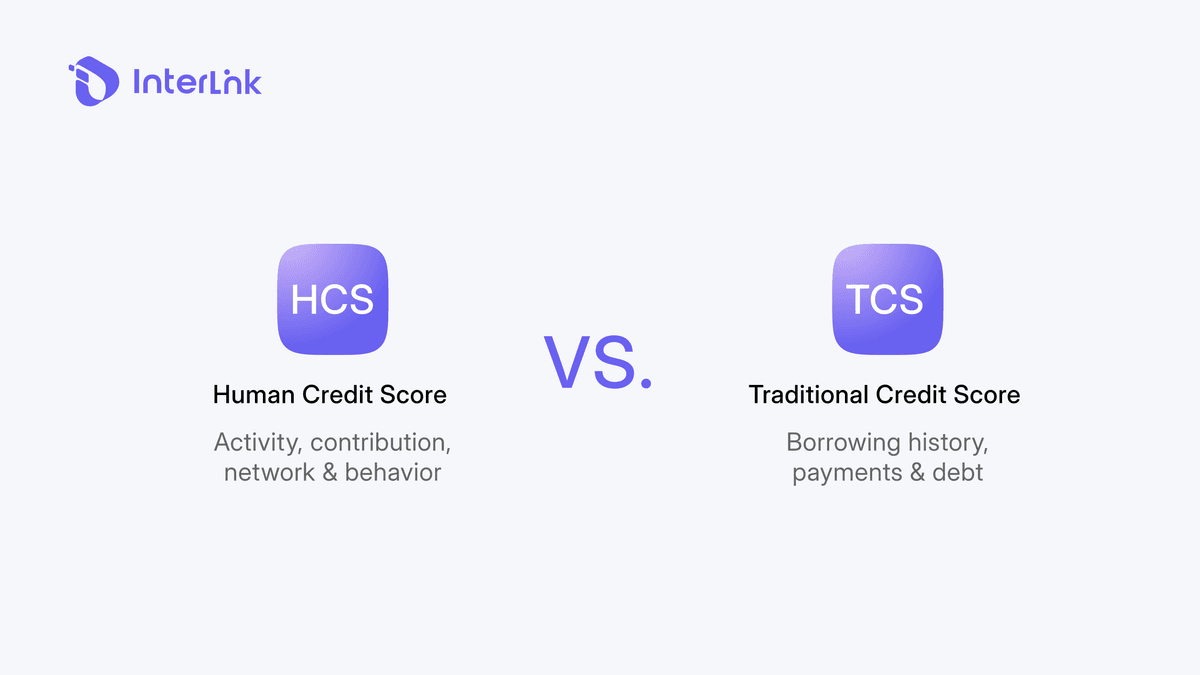
Traditional credit scores measure financial reliability based on borrowing history, payment records, and debt levels. HCS takes a fundamentally different approach. It measures human trustworthiness based on activity consistency, network quality, and contribution to the ecosystem. This makes it accessible to anyone with a verified InterLink ID, regardless of their financial background.
Key Concept: Trust as a Measurable Asset
In the InterLink ecosystem, trust is not just a concept; it is a measurable asset. Your HCS influences everything from mining rewards to access to premium features. The higher your score, the more the network trusts you, and the more benefits you unlock.
How Is HCS Calculated?
Understanding how HCS is calculated helps you make better decisions about your activity in the ecosystem. The score is not static – it evolves based on your behavior over time.
Activity Consistency
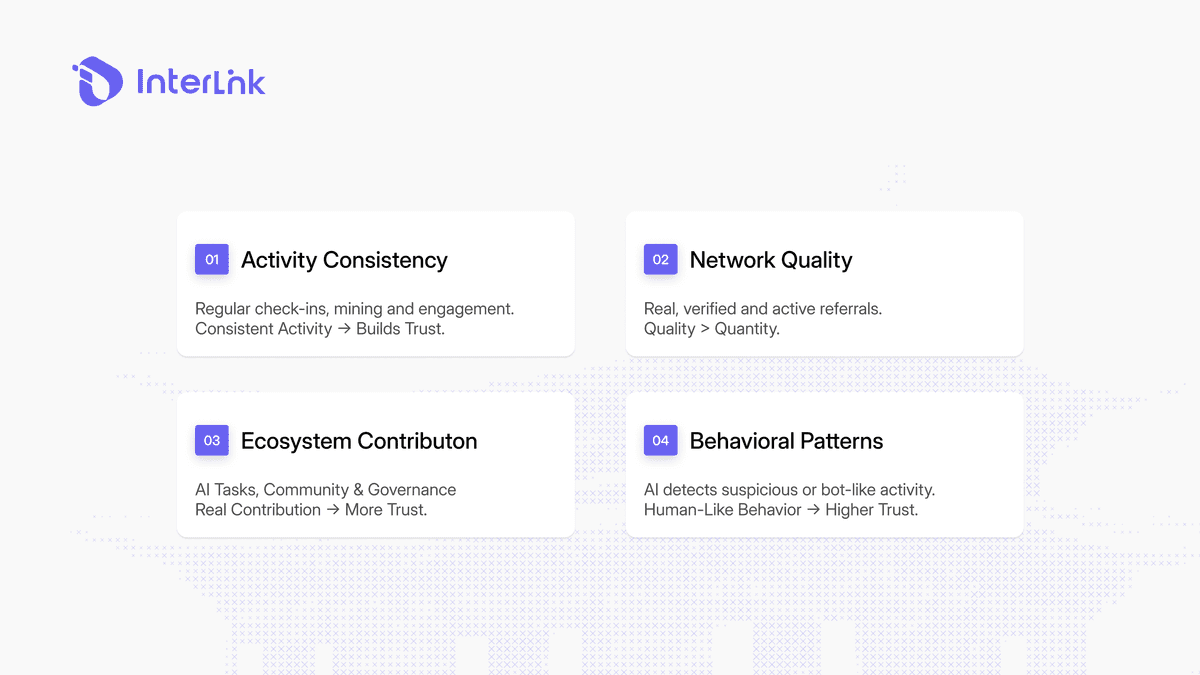
Consistent daily check-ins, regular mining sessions, and ongoing engagement are foundational to a strong HCS. Users who maintain a steady streak of activity demonstrate reliability and commitment to the network. Even small actions, done consistently, have a cumulative effect on your score.
Network Quality
The quality of your referral network matters significantly. Active, verified referrals contribute positively to your score, while inactive or unverified accounts may have less impact. Building a network of genuine, engaged users strengthens your HCS over time.
Contribution to the Ecosystem
Participation in AI data tasks, community activities, and governance proposals demonstrates active contribution. These activities signal that you are not just a passive user but an engaged participant in the ecosystem's growth. The more you contribute, the more the system recognizes your value.
Behavioral Patterns
The AI system analyzes behavioral patterns to detect suspicious or bot-like activity. Consistent, human-like behavior is rewarded, while irregular or automated patterns may negatively affect your score. This is part of InterLink's broader Sybil resistance strategy, ensuring that only genuine humans receive the highest trust levels.
Why Does HCS Matter for Users?
HCS is not just a number – it has practical implications for your experience in the InterLink ecosystem. A higher score unlocks more opportunities and benefits across multiple areas.
Influence on Mining Rewards
Your HCS can influence the rewards you earn through mining and other activities. Users with higher trust scores may receive better rates or access to bonus multipliers that are not available to lower-scored accounts. This creates a direct financial incentive to maintain genuine, consistent participation.
Access to Premium Features
Certain features and services within the InterLink ecosystem may be gated by HCS. This could include early access to new products, priority participation in governance votes, or eligibility for exclusive campaigns. As the ecosystem expands, HCS is expected to become an increasingly important access layer.
Verification and Migration Priority
HCS can affect your priority for future verification steps and token migration processes. Users with stronger scores may be processed faster or receive preferential treatment during critical ecosystem transitions. This is particularly relevant as InterLink moves toward broader token distribution and mainnet expansion.
Reputation in the Community
A high HCS signals trustworthiness to other users and to the core team. This can open doors to collaboration opportunities, ambassador programs, and leadership roles within the community. Your reputation becomes a valuable asset that travels with you across the ecosystem.
How to Improve Your Human Credit Score
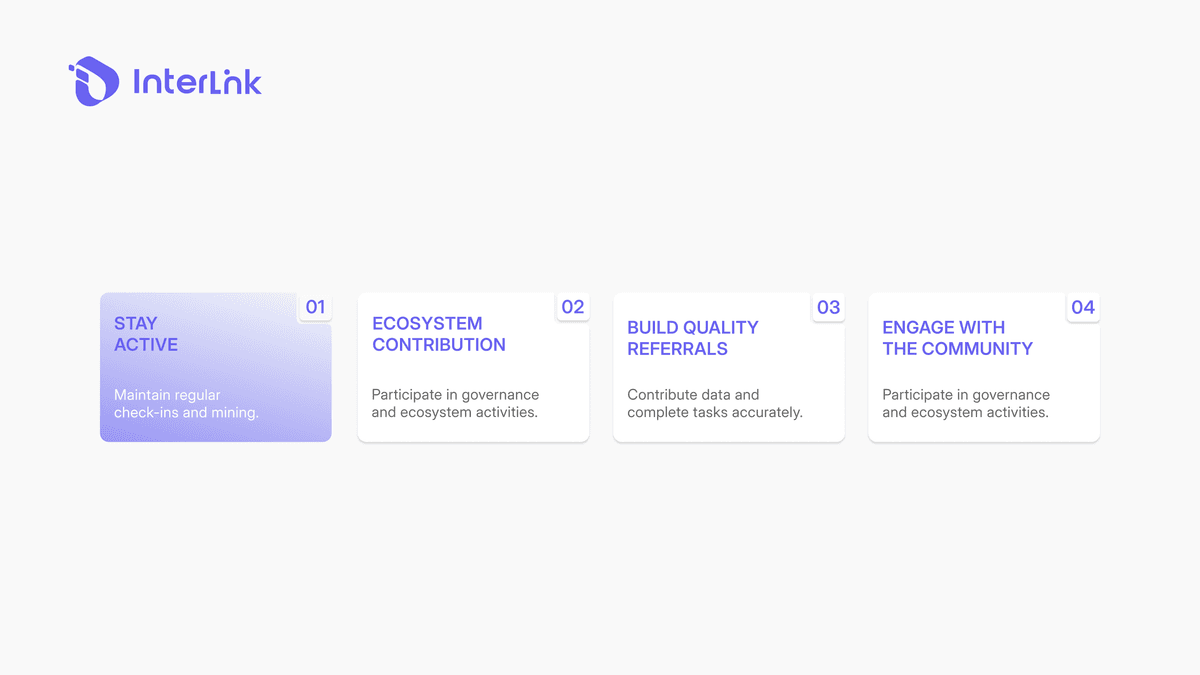
Improving your HCS is a long-term process that rewards consistent, genuine participation. There are no shortcuts – the system is designed to recognize real human behavior over time.
Maintain Consistent Daily Activity
The most important factor is consistency. Complete your daily check-ins, maintain your mining streak, and stay engaged with the app regularly. Even small actions, done consistently, have a cumulative effect on your score. Missing days or irregular activity can slow your progress.
Build a Quality Referral Network
Focus on inviting real, active users who will genuinely participate in the ecosystem. Quality matters more than quantity. Re-engaging inactive referrals can also boost your Active Referral Rate, which is a key metric that may prioritize future verification and migration opportunities.
Participate in AI Data Tasks
Contributing to AI data validation tasks demonstrates active contribution and helps train AI models. This is one of the most direct ways to increase your HCS while earning ITLG rewards. The more tasks you complete accurately, the more the system recognizes your contribution.
Engage with the Community
Participate in governance votes, join community discussions, and contribute to ecosystem initiatives. Active community members are valued and rewarded within the Human Network. Your engagement signals that you are invested in the long-term success of the ecosystem.
HCS and the Future of InterLink
HCS is expected to play an increasingly important role as the InterLink ecosystem evolves. Understanding its trajectory helps you plan your long-term participation.
Integration with More Services
As more dApps and Mini-Apps launch on InterLink, HCS may become a key factor for accessing services that require high trust levels. Developers can leverage HCS to build reputation-gated features. This creates a new design pattern where trust becomes a core component of application logic.
Role in Ecosystem Governance
HCS may influence governance weight in the future, potentially combined with ITL stake weight and InterLink ID weight. This would give trusted users a stronger voice in protocol decisions. The goal is to balance token-based influence with human trust metrics.
Expanding Beyond the App
The concept of a portable trust score could extend beyond the InterLink App. As the ecosystem grows, HCS could become a recognized measure of on-chain reputation that other platforms integrate. This would position InterLink as a leader in decentralized identity and trust infrastructure.
Conclusion
The Human Credit Score is a core part of InterLink's human-centric design. It rewards genuine participation, filters out low-quality accounts, and creates a trust layer that benefits the entire ecosystem. By understanding how HCS works and taking steps to improve your score, you can unlock more rewards, access premium features, and strengthen your position in the Human Network.
As InterLink continues to evolve, HCS will likely become an increasingly important metric for users who want to maximize their participation. Start building your score today by staying active, contributing to the ecosystem, and engaging with the community.
Disclaimer: This guide from InterLink Labs is for educational purposes only. HCS calculation methods, reward mechanisms, and feature availability may change. Always verify the latest information through official InterLink channels and the app.

